The most useful shoe closet ideas are adjustable shelves set to each shoe type, slanted shelves for heels, separate zones for everyday, heavy and occasional pairs, and lighting so you can see every pair. Plan about 7 to 9 inches of shelf width per pair and 12 to 14 inch deep shelves, then add drawers, a bench and a mirror if there is room.
Your shoe collection should not sit in a dark corner or pile up near the door. A custom shoe closet gives every pair a visible place, which makes getting dressed faster and keeps shoes in better shape.
Whether you own a few pairs or many, these five ideas will help you create a shoe storage area that looks good and works for all your footwear.
1. Use Adjustable and Slanted Shelving
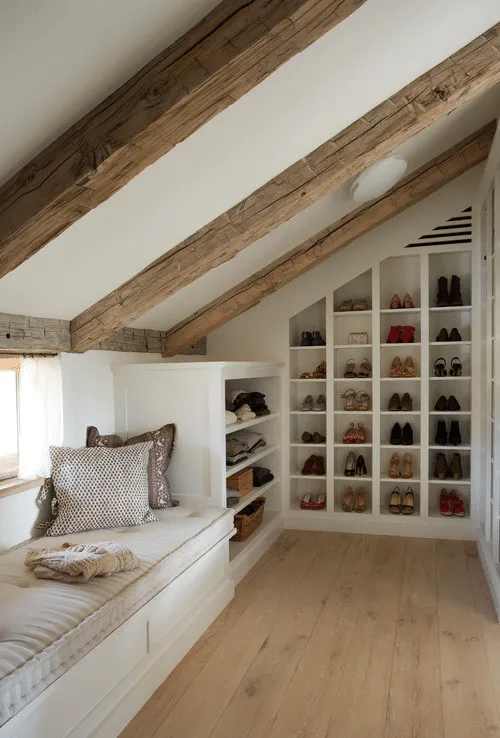
Photo by Holmes Hole Builders LLC
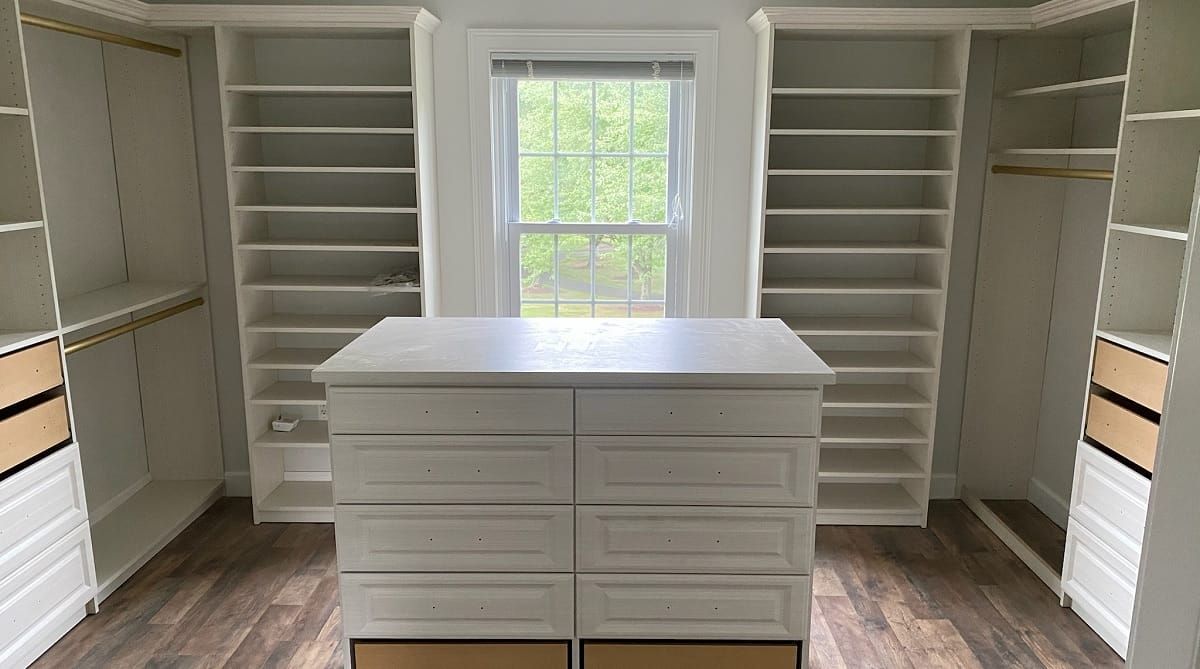
A good shoe closet starts with the right shelves. Adjustable shelves let you set the spacing for flats, sneakers, heels and boots, and change it as the collection changes. Fixed shelves waste the space above low shoes and cannot fit tall ones.
Think about shelf depth too. Shelves about 12 to 14 inches deep fit most shoes, including sneakers and casual shoes. Larger sneakers and boots may need deeper shelves. For high heels, slanted shelves with a front lip let the shoes rest naturally and show every pair at once.
Use the full height. Shelves from floor to ceiling hold far more than a single rack. Keep the top shelves for special-occasion and off-season pairs, and keep a sturdy step stool nearby so you can reach them safely.
Pro Tip: Store the shoes you wear most with the toe facing out on an open shelf. You see every pair at a glance, which speeds up the morning.
Shoe Shelf Spacing by Type
| Shoe type | Height between shelves | Shelf style |
|---|---|---|
| Flats, sandals, slippers | About 5 to 6 inches | Flat shelf or shallow drawer |
| Sneakers, loafers, dress shoes | About 6 to 8 inches | Flat shelf |
| High heels | About 8 to 10 inches | Slanted shelf with lip or heel rail |
| Ankle boots | About 10 to 12 inches | Flat shelf |
| Tall boots | About 16 inches or more | Floor level or tall cubby, with boot shapers |
2. Create Zones for Different Footwear Categories
Organizing a shoe closet is much easier when each type of shoe has a designated spot. It speeds up your day and keeps footwear in good shape. If the closet is full, overflow and seasonal pairs can move to garage storage with sturdy shelves or weather-protected bins.
Set up a daily rotation spot at waist to eye level for the shoes you wear most: sneakers, work shoes and favorites. You can grab them without digging through everything else.
Put boots and heavy footwear on the lowest shelves or the floor. They are easy to set down and pick up there, and their weight stays off the upper shelves. Pull-out shoe shelves at this level save bending down to reach the back.
Keep special-occasion shoes and off-season pairs on the upper shelves. You do not need wedding heels or winter boots every day. Clear shoe boxes protect them from dust while still showing what is inside.
Add a small care station with polish, brushes and cleaning supplies. When the tools are in the closet, shoes get cleaned before they go back on the shelf.
3. Add Smart Storage Accessories to Your Shoe Closet
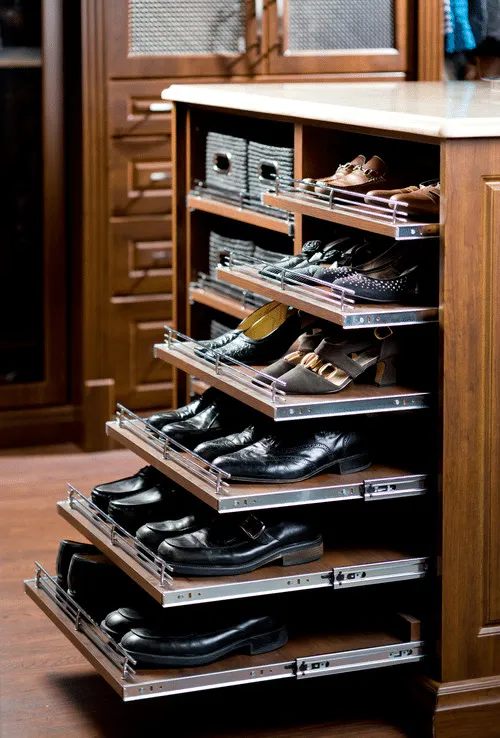
Photo by Organized Interiors
The right accessories get more out of the space and help you declutter your home. Think beyond basic shelves and choose storage that suits your collection.
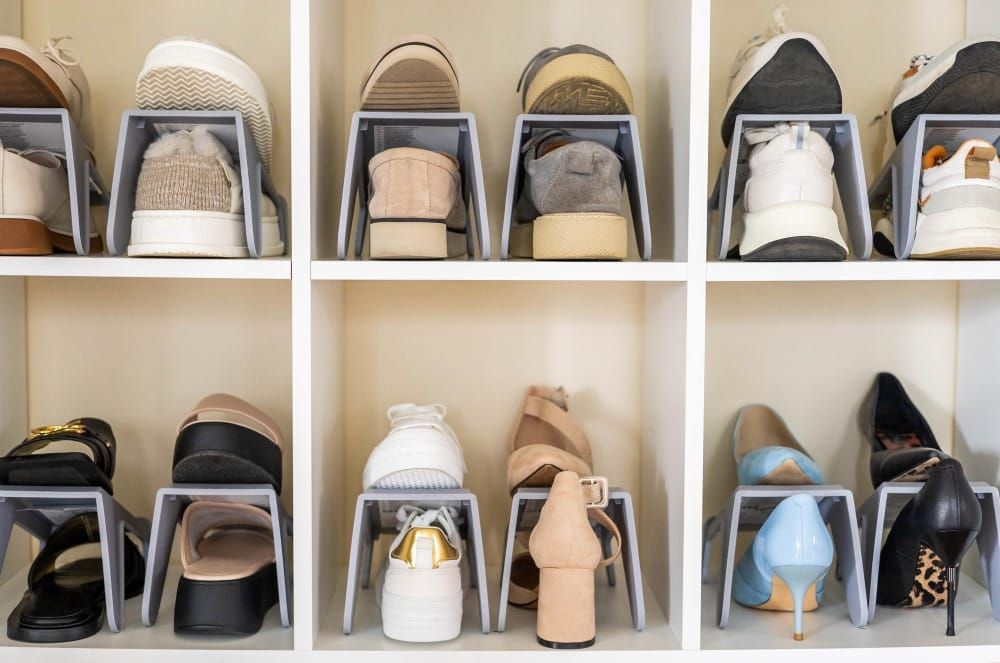
- Heel racks keep stilettos neat and protect the heels.
- Boot shapers help tall boots keep their shape and stand upright.
- Sneaker cubbies show off athletic shoes and make them easy to grab.
- Pull-out drawers hold sandals and flats in shallow drawers, shoe care supplies in medium ones and boots or folded items in deep ones. Soft-close drawers close gently and protect what is inside.
Leave space for the accessories you match with shoes: handbags, belts and jewelry. Drawers with dividers keep them neat, so an outfit comes together in one place.
A small bench or chair in or next to the shoe closet makes trying on shoes easier and gives you somewhere to set things down while you tidy.
4. Add Personal Touches and Display Elements
Your shoe closet should reflect your style. A few personal touches make a storage area feel like part of your room.
Add a full-length mirror. It makes the space feel larger, lets you check the whole outfit, and reflects light onto the shelves.
Hang artwork or photos you like, such as fashion prints, travel shots or family pictures, so the space feels personal rather than purely practical.
A small rug or a different floor finish marks the space and feels good underfoot.
Display your most special pairs. Shadow boxes or floating shelves work well for vintage, designer or sentimental shoes, and they are a good conversation piece when people visit.
5. Light Your Shoe Collection Properly
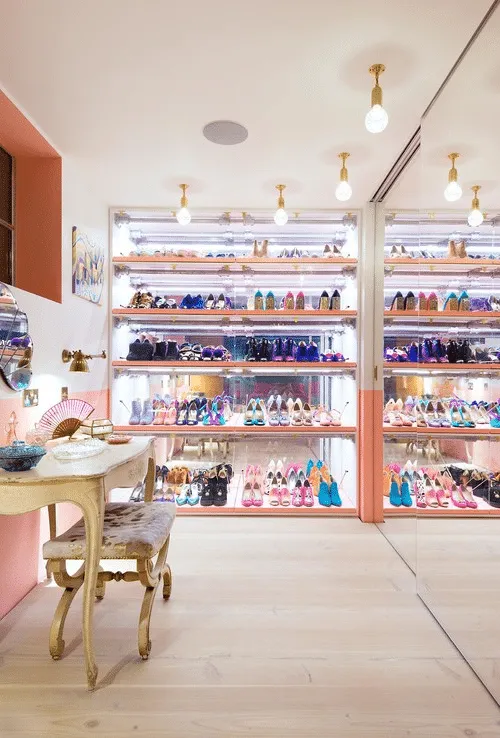
Photo by Alexander Owen Architecture
Good lighting helps you find the pair you want quickly and makes a shoe closet feel like a boutique display. It is also the upgrade people notice most in a wardrobe or dressing area.
LED strip lighting under each shelf lights every pair without shadows. Warm white LEDs (about 3000K) give a welcoming feel. Daylight LEDs (about 5000K) show true colors, which helps when matching shoes to an outfit.
Motion-sensor lighting turns on when you open the door or walk in and saves energy. Battery-powered sensors are easy to add to an existing closet; hardwired lighting suits a new build.
Accent lighting with small spotlights shows off favorite heels or sneakers, and backlit glass shelves give a modern display look.
Shoe Wall and Small Shoe Closet Ideas
A shoe wall runs shelves floor to ceiling along one wall of a closet, dressing room or bedroom. With adjustable shelves 12 to 14 inches deep and lighting under each one, a single wall can hold a large collection in plain view. Put everyday pairs in the middle, boots low and occasional shoes up high.
In a small closet, the height and the door do the work:
- A narrow floor-to-ceiling shoe tower beside the hanging section.
- A slanted shelf above the floor rack to double the floor storage.
- An over-the-door organizer for flats and sandals.
- The shelf above the hanging rod for off-season pairs in labeled boxes.
Our post on boot storage ideas covers boots in more detail.
Shoe Closet Ideas by Space
Where the shoes live changes what works best.
Walk-In Closet
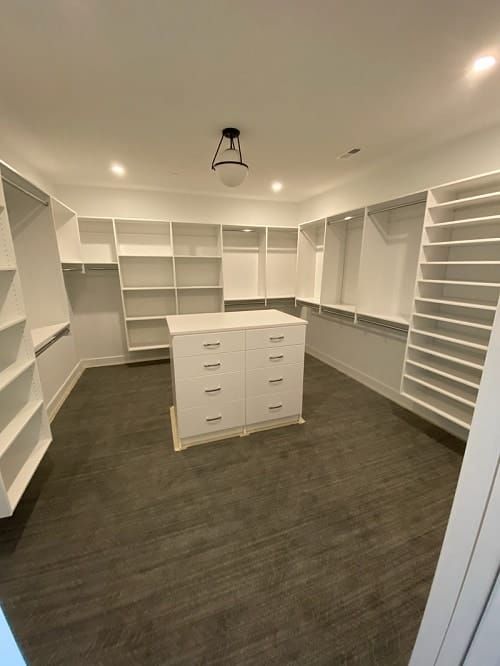
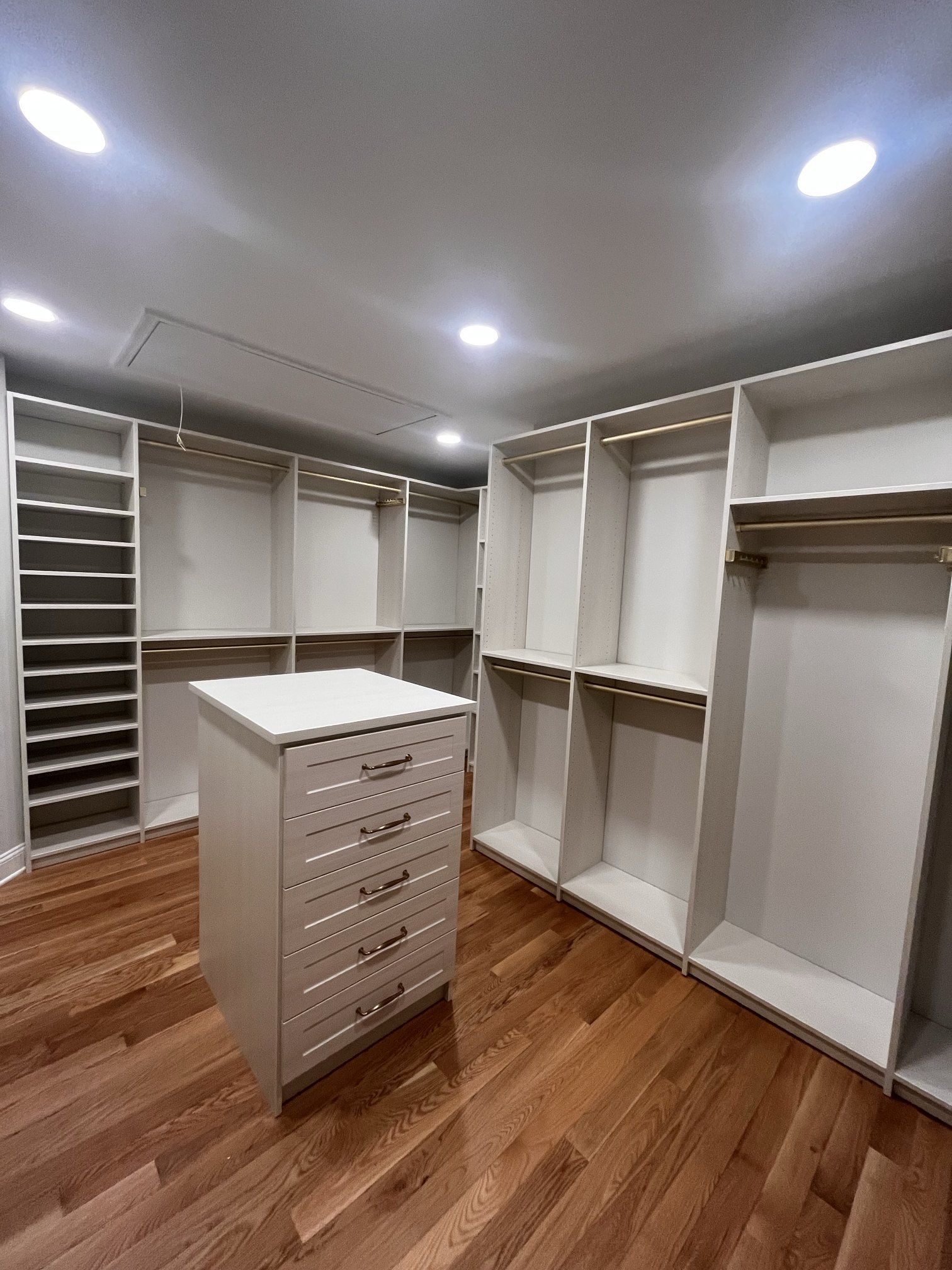
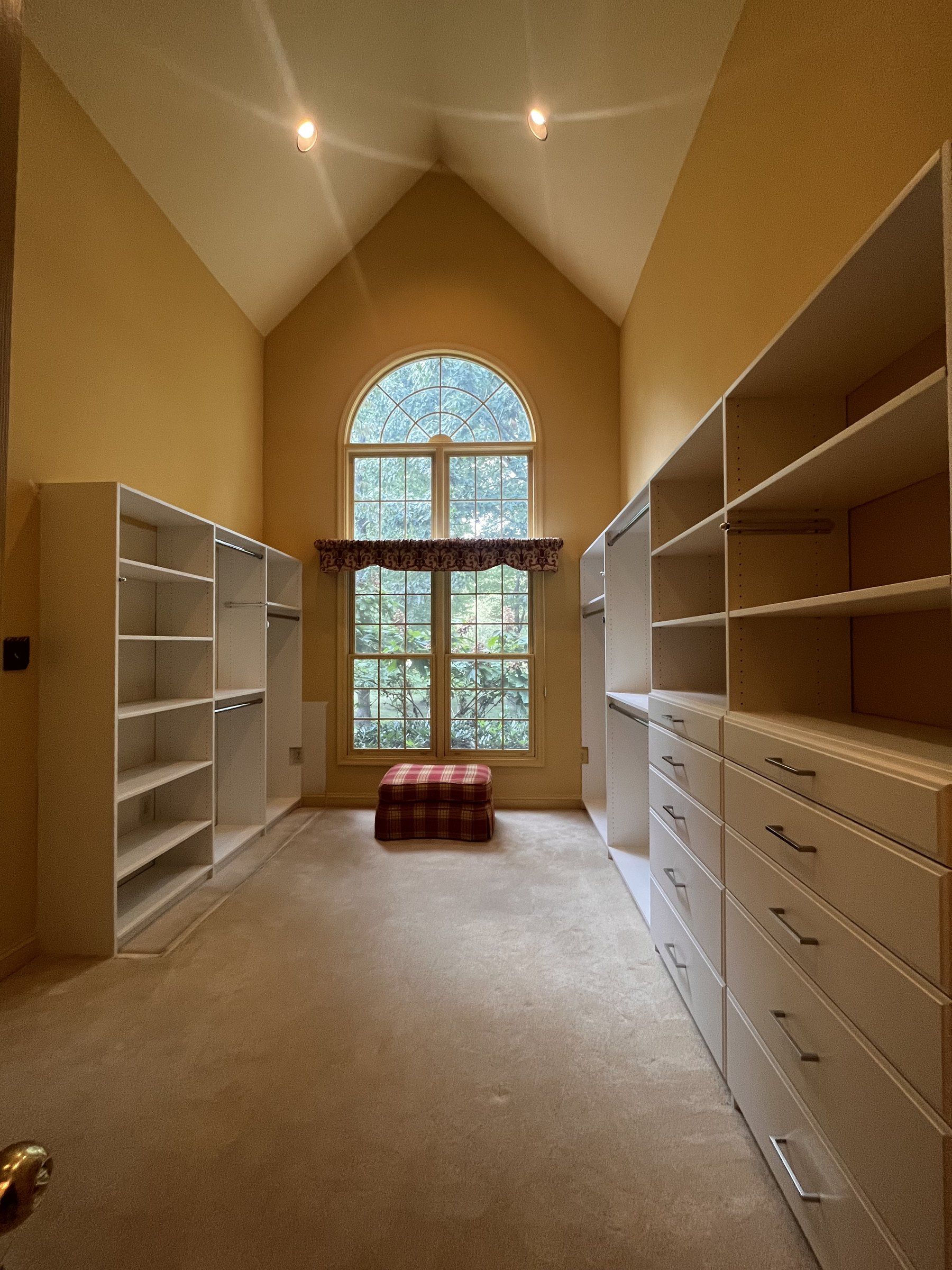
A walk-in usually has room for a dedicated shoe section or a full shoe wall. Put it on the wall you see first when you walk in, give it lighting, and keep it beside the hanging clothes you pair with most often. An island with shallow drawers can hold flats, sandals and shoe care supplies. Our walk-in closet design tips cover layouts in more detail.
Reach-In Closet
In a reach-in, shoes compete with hanging space. A shoe tower at one end of the closet, from floor to ceiling, holds more than a floor rack and keeps pairs off the floor. Slanted shelves under short-hang clothes use space that otherwise collects piles.
Entryway or Mudroom
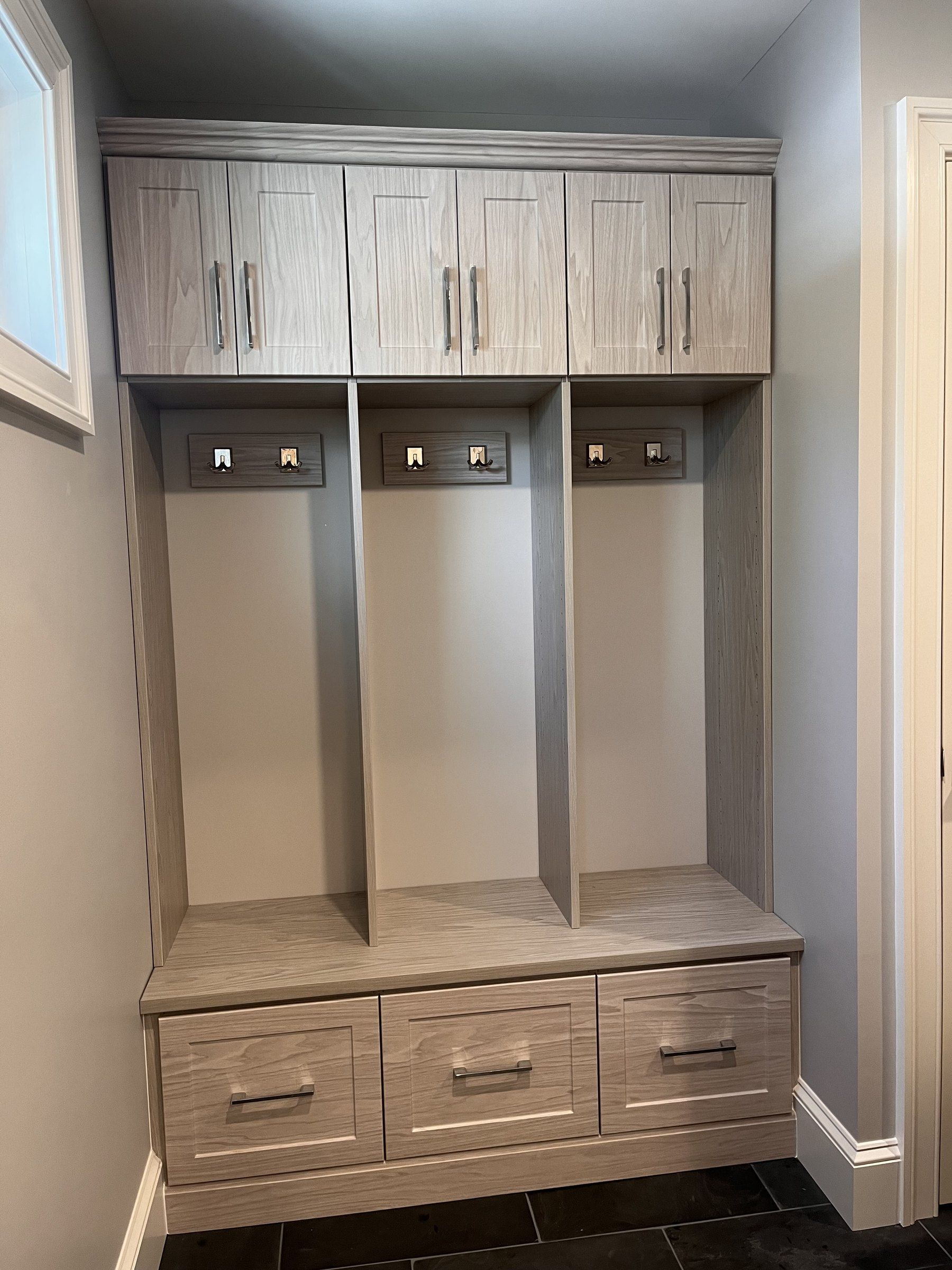
Everyday pairs that go in and out with you belong by the door, not in the bedroom closet. Open cubbies or slanted shelves under a bench, plus a tray for wet shoes, keep the entry clear. Our mudroom organization ideas show how to set up a drop zone for the whole family.
Bedroom Wardrobe
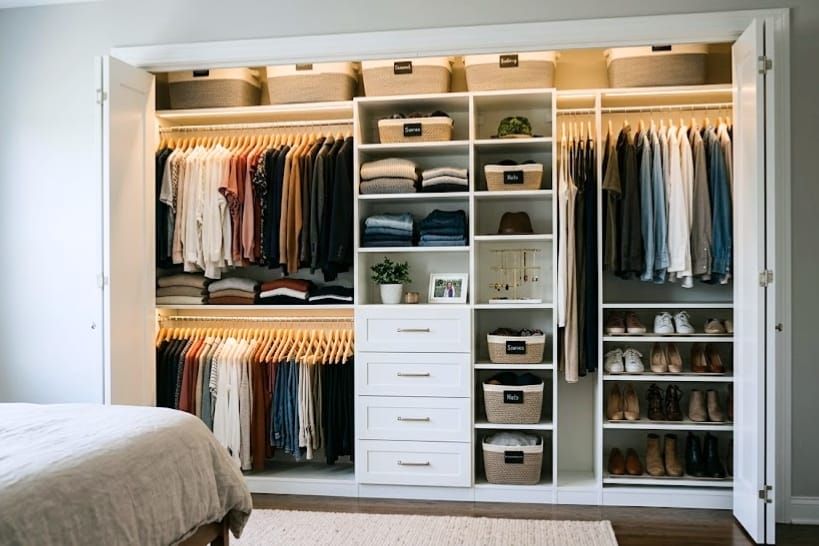
If the bedroom has no walk-in, a built-in wardrobe can include a shoe section with pull-out shelves behind closed doors, so the shoes stay out of sight and free of dust.
Kids’ Closets
Children’s shoes are small but numerous, and they outgrow them fast. Low open cubbies or a bottom shelf they can reach let kids put their own shoes away. Adjustable shelves can move up as the shoes get bigger, and a labeled bin for outgrown pairs makes it easy to pass them on or donate them at the end of each season.
Shoe Cabinet or Open Shelves?
| Open shelves | Shoe cabinet with doors | |
|---|---|---|
| Visibility | Every pair in view | Hidden until you open the doors |
| Dust | Shoes collect dust over time | Doors keep dust off |
| Airflow | Good, so shoes dry out | Less airflow; add ventilation or leave wet shoes out first |
| Look | Display style, works with lighting | Clean, furniture-like front |
| Best for | Walk-ins, shoe walls, everyday pairs | Bedrooms, entries, rarely worn pairs |
Many custom shoe closets mix both: open shelves at eye level for the shoes you wear often, and cabinets or drawers for occasional and off-season pairs.
How to Protect Shoes in Storage
Storage that keeps shoes visible should also keep them in good shape.
- Let shoes dry first. Wet or sweaty shoes put straight into a closed cabinet or box can develop odor and mildew. Leave them out overnight.
- Keep the shape. Boot shapers and shoe trees stop creasing and sagging, especially for leather.
- Avoid long-term airtight plastic for leather. Leather needs to breathe; breathable boxes or open shelves are better for long storage.
- Keep them away from heat and direct sun. Sun fades colors and heat dries out leather and adhesives.
- Clean before storing for the season. Dirt and salt left on shoes for months are harder to remove later.
Count Before You Build
Before you plan shelves, count your shoes by type: flats and sandals, sneakers and everyday shoes, heels, ankle boots and tall boots. Multiply each count by about 7 to 9 inches of shelf width per pair, use the spacing table above for shelf heights, and add some room for new pairs. That number tells you whether a shoe tower, a section of a closet or a full shoe wall is the right size. If two people share the closet, count each collection separately and give each person a zone, so one collection does not spill into the other.
Plan Shoe Storage That Changes With You
A well-organized shoe closet keeps footwear in order and makes the morning easier. Good shelving, lighting, clear zones, the right accessories and a few personal touches give you a space that looks like a boutique and works for how you live.
Your shoe storage should also be able to change as your collection does, which is where adjustable shelves and a custom design help. Closets For Less designs and installs custom shoe closets in Bucks County, Montgomery County and the Philadelphia area, starting with a free in-home design consultation. For budgeting, see the custom closet cost guide.