The best boot storage ideas keep boots upright, off the floor and close to the door you use: a wall-mounted rack or boot tray in the mudroom, tall cubbies or shelves in the closet, and labeled bins or under-bed boxes for off-season pairs. Below are 17 ideas, room by room, plus how to store winter, work and rain boots.
Boots are essential in many households. From snow boots to rubber boots, hiking boots to rain boots, these hardwearing shoes do a lot of work. But they also take up space. Without a good system, boots clutter entryways, pile up in closets, and get lost in garages. To avoid the mess, you need smart boot storage ideas.
Here are 17 ideas for storing boots in every part of the home. They work in a small entry as well as a full-size mudroom, and they keep floor space clear and your footwear in order.
Boot Storage Ideas for the Mudroom
For storing boots, the mudroom (if you have one) is your first line of defense. It’s where muddy boots come off and organization begins.
1. Wall-Mounted Boot Racks
Wall-mounted boot racks lift footwear off the ground and use vertical space. Mount them at staggered heights to fit kids’ and adults’ boots, and choose pegs that hold boots upside down so wet pairs drain.
2. Custom Mudroom Cubbies
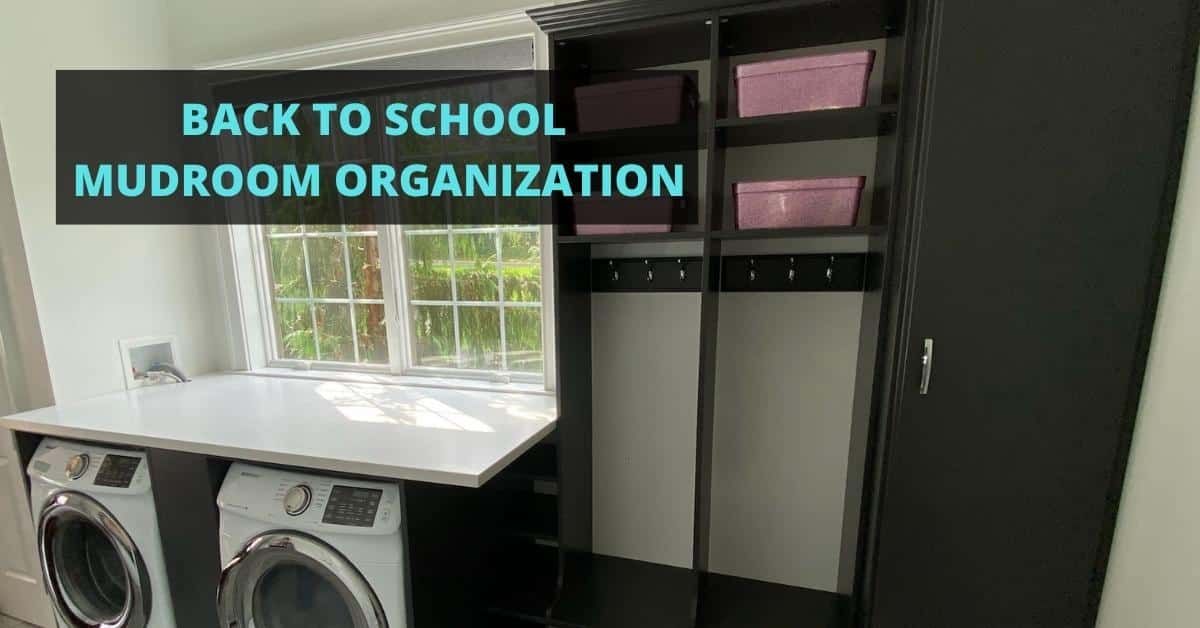
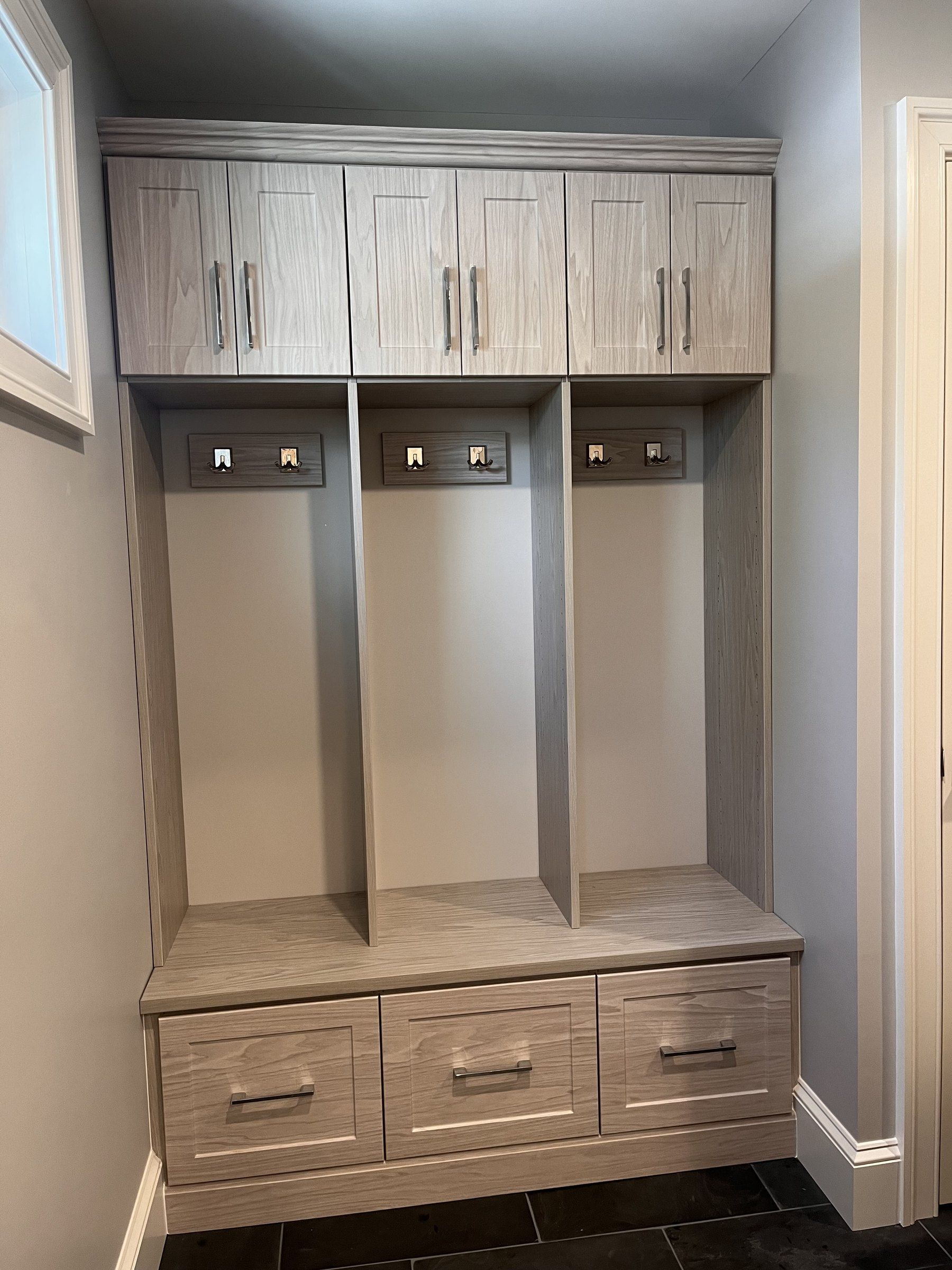
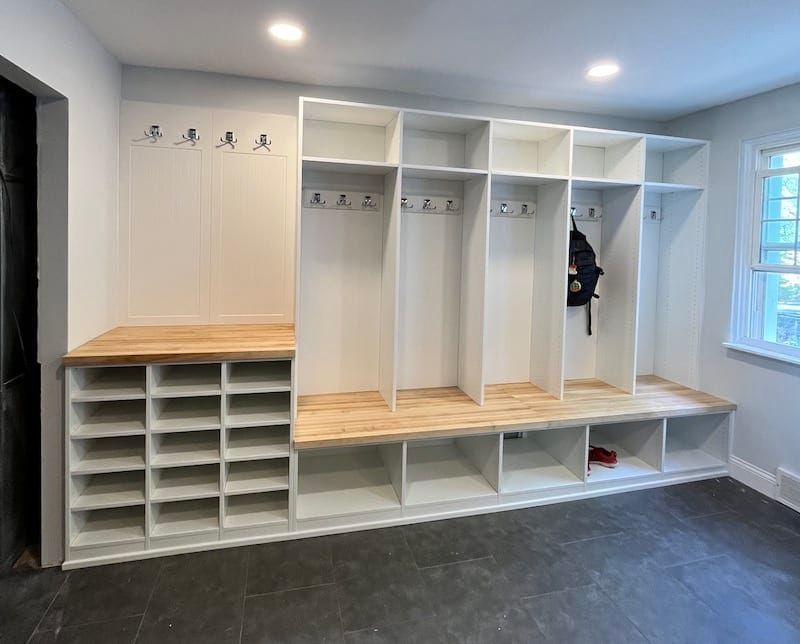
If you’re planning a custom mudroom, add cubbies built specifically for boots, tall enough for the tallest pair in the house. Open storage makes it easy to see and grab what you need without digging through piles of shoes.
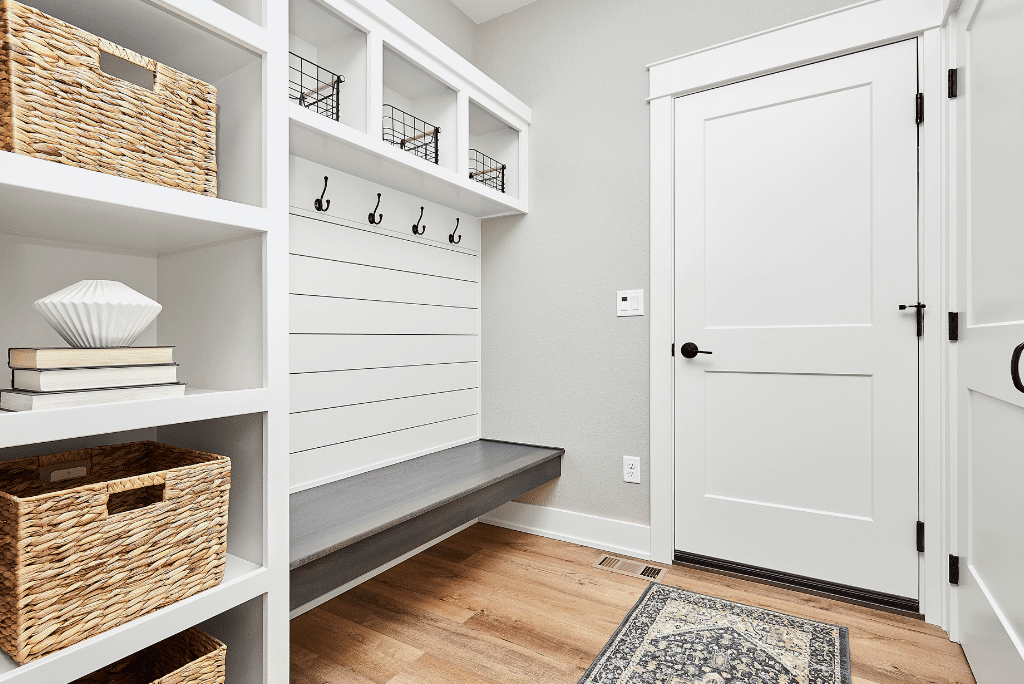
3. Built-in Benches With Storage Below
A bench with open shelves or boot drawers underneath adds function without taking up extra room. Use this to stash regularly worn footwear neatly out of the way.
4. Rubber Trays Near Entry Doors
A rubber tray is a simple shoe storage solution. Use one to contain wet and muddy boots. Trays are easy to rinse and protect the floor and the bottoms of cabinets from water and salt.
Related Articles: Mudroom Closet and Storage Ideas and Mudroom Organization Ideas for Families
Entryway Boot Storage Ideas
Not every home has a mudroom. Entryways often become default drop zones. These boot storage ideas add order and make use of limited space.
5. Narrow Boot Rack With Hooks Above
Place a boot rack in a corner or next to the front door. Hang coats, hats, and bags above it to create a practical entry zone.
6. Slim Shoe Racks With Tall Sections
Many store-bought shoe racks work great for sneakers or flats but fall short for boots. Choose a rack specifically designed with taller compartments for standing boots upright.
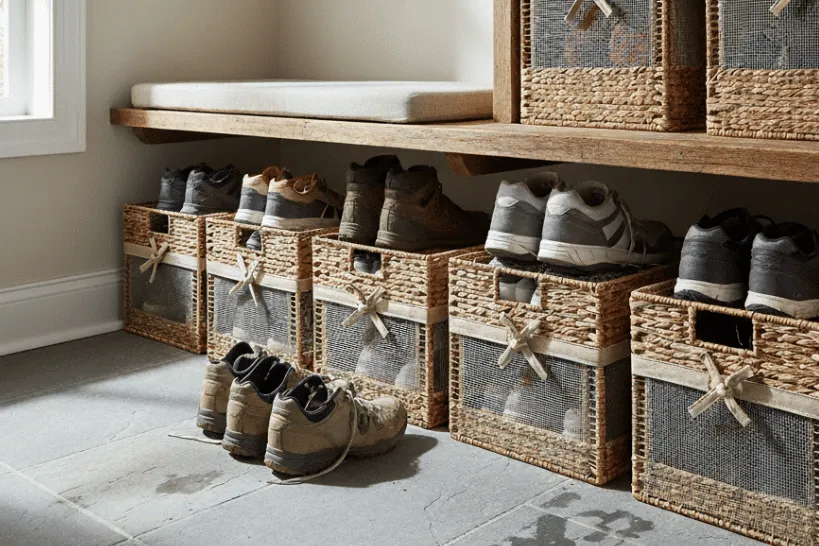
7. Lined Baskets With Hard Bottoms
A lined basket works well for hiding boots in plain sight. Choose one deep enough to hold pairs vertically, and strong enough to avoid collapsing under weight.
Tip: Organize by Season
Keep in-season boots near the door and move out-of-season pairs to the bedroom or garage storage. This rotates inventory and limits daily clutter.
Closet Boot Storage Ideas
Closets, even small ones, can store more than clothes. With a few adjustments, you can create a space where boots stay visible and accessible.
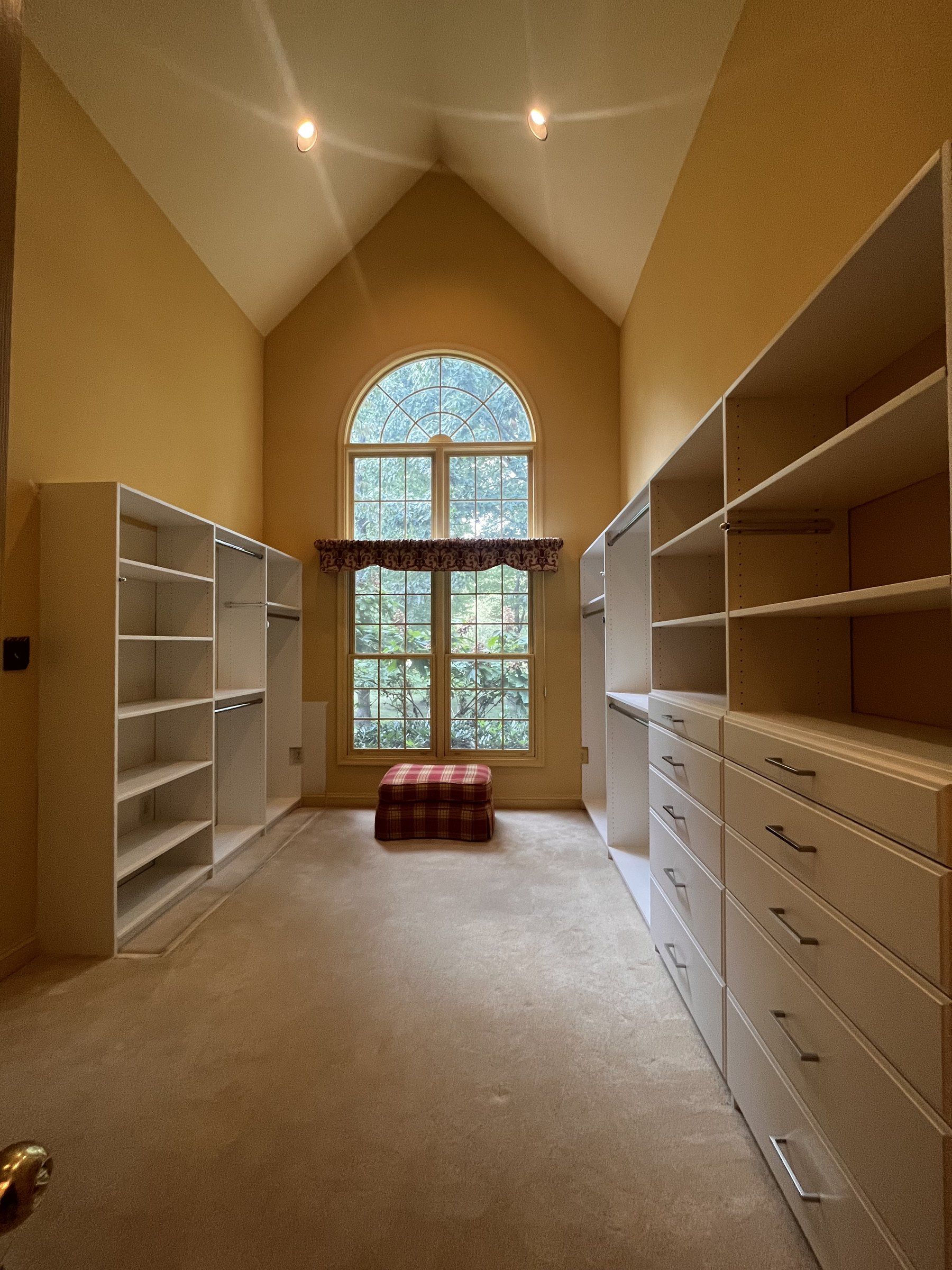
8. Custom Closets With Vertical Dividers
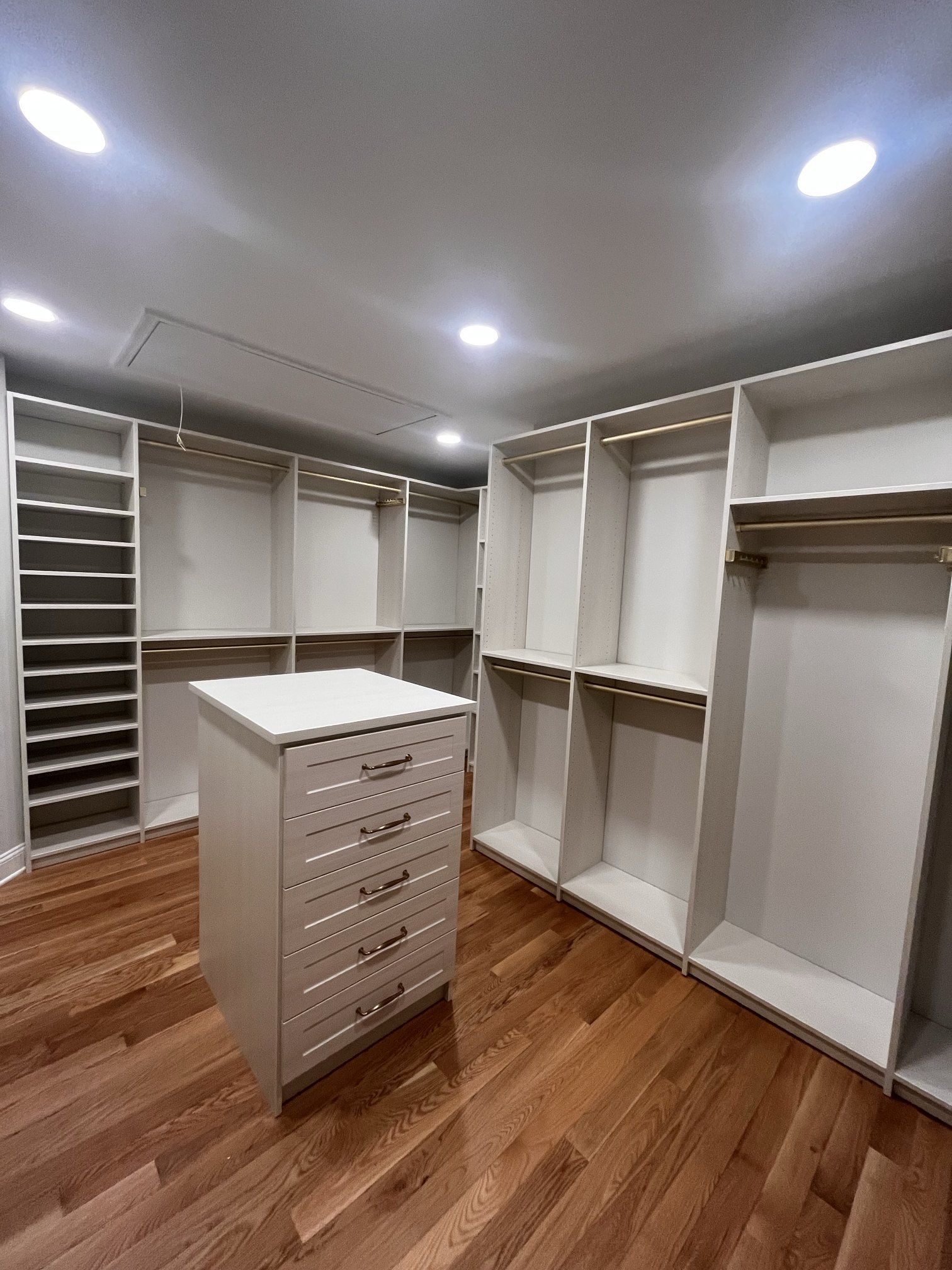
Custom closets make storing boots straightforward. Add vertical cubbies or adjustable shelves sized for boots; they use the full height of the closet and keep tall shafts from collapsing.
9. Sliding Boot Trays
Pull-out boot trays are ideal in custom setups. They give each pair a home and make cleaning easier. You can even add ventilation to reduce moisture buildup.
10. Over-the-Door Organizers for Short Boots
An over-the-door organizer designed for shoes can do double duty for short boots. While tall boots won’t fit, ankle styles and rain boots slide in easily.
11. Clear Boot Boxes for Top Shelves
Place boots you rarely wear in clear plastic bins. Label each box and organize by frequency of use or season. Use open shelves in your closet to keep them in order.
Bonus Tip: Use Boot Shapers
Boot shapers help tall boots keep their structure. They also stand better on racks or shelves when they’re not folding at the ankle.
Related Article: 5 Creative Ways to Upgrade Your Custom Shoe Closet
Bedroom Boot Storage Solutions
When closet space runs low or you rotate boots by season, the bedroom can pick up the slack. These solutions add function without disrupting the room’s flow.
12. Under-Bed Boot Boxes
Store infrequently worn or seasonal boots in under-bed boxes. Many come with covers to keep dust out. Choose ones with a flat shape to make the most of your floor space.
13. Vertical Boot Stand Near the Dresser
A slim boot stand can hold several pairs in a tight footprint. Place one near your dresser or inside a corner, especially for boots you wear often.
Living Room Boot Storage Ideas (for Open Homes)
In open floor plans, the living room often blends naturally with the entry. Instead of letting boots spread out across the floor, use hidden storage options.
14. Storage Ottomans With Compartments
A storage ottoman provides a place to sit and hide boots when guests drop by. Choose one with divided sections to keep pairs upright and separate.
15. Decorative Baskets by the Entry Wall
Neutral-toned baskets made from canvas or woven materials help store boots without looking out of place in your living room décor. Stick to open storage when possible to encourage use and cut down on clutter.
Garage Boot Storage Ideas
The garage offers extra space for seldom-worn boots like work gear, snow boots, or backup pairs. Just because it’s out of sight doesn’t mean it shouldn’t stay organized.
16. Wall-Mounted Boot Hangers
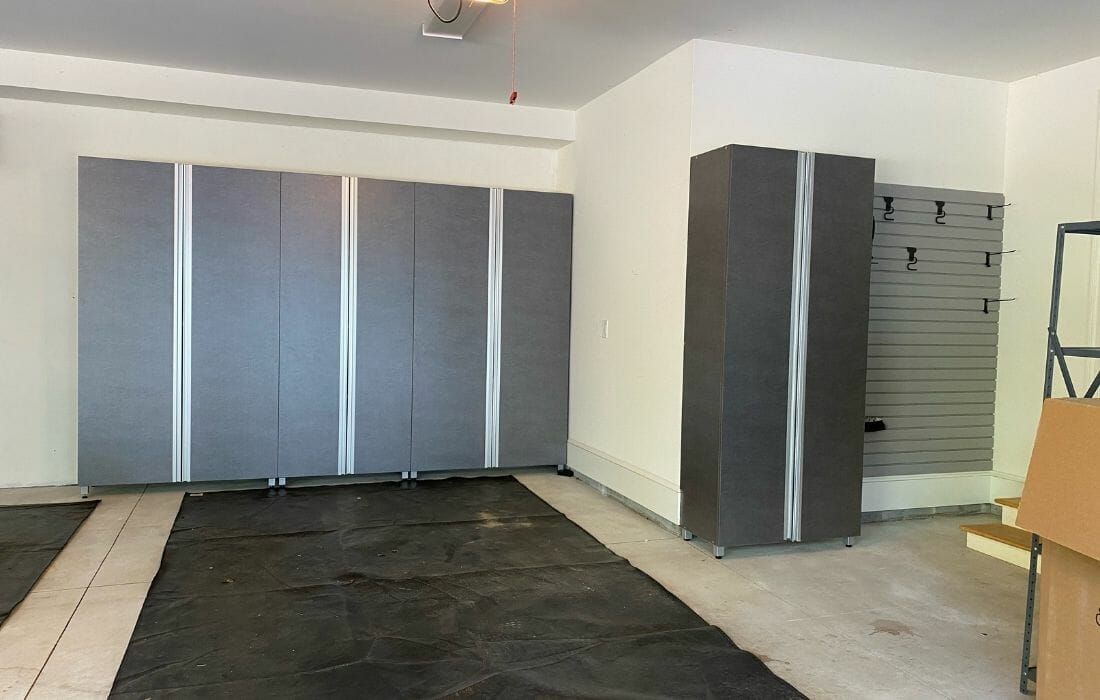
Look for sturdy metal hangers or pegs rated for heavy work and snow boots. Mounted on a wall or a slatwall panel near the garage door, they keep boots off the slab and let them dry between uses.
17. Industrial Boot Racks or Plastic Bins
A freestanding metal rack handles everyday work and yard boots. For messy or seldom-worn pairs, waterproof bins with lids are the way to go. Label each bin and stack them on open shelves along the wall, or inside garage storage cabinets if you want them out of sight.
How to Store Boots by Type
| Boot type | Day-to-day storage | Off-season storage |
|---|---|---|
| Winter and snow boots | Tray or open rack by the door to dry | Cleaned, dried, in a breathable bin |
| Rain and rubber boots | Upside-down wall pegs or a drip tray | Upright on a garage or closet shelf |
| Work boots | Heavy-duty rack at the garage or mudroom entry | Same rack; keep off carpet |
| Tall fashion boots | Boot shapers, tall cubby or shelf | Shapers in, in a box or bag |
| Ankle boots | Shoe shelf or over-the-door organizer | Clear labeled boxes on a top shelf |
How to Store Winter Boots
Winter boots need to dry before they are put away, so keep the pairs you wear on a tray or rack near the door, not in a closed closet. At the end of the season, brush off salt and mud, let them dry fully, insert shapers or stuff them with paper, and store them somewhere cool and dry.
How to Store Boots in a Small Space
Use height instead of floor. Hanging boot clips on a closet rod, a wall rack, a slim rack with tall compartments or a single shelf above the floor rack all add room without a bigger footprint. Rotate seasonal pairs into under-bed boxes so only current boots take up space by the door.
Why Custom Organization Helps
If boot clutter is an ongoing challenge, built-in organization can help. A custom closet, mudroom cabinetry or garage setup can hold a lot of footwear in a compact area.
When you opt for custom:
- You gain boot racks made to fit your space and boots
- You use vertical space more effectively
- Every pair has a home, reducing clutter and time spent looking
- You control how much storage space goes to each shoe or boot type
Working with a custom closet company lets you build around your real habits, from boots worn daily to pairs that only come out in winter. Closets For Less designs custom shoe closets and mudroom storage in Bucks County, Montgomery County and the Philadelphia area, starting with a free in-home design consultation.
Cut the Clutter and Give Every Boot a Place
Boots shouldn’t create chaos. No matter the size of your home, there’s a practical way to store them, from slim shoe racks in a hallway to custom open shelves in a mudroom.
Take a room-by-room approach and rethink how boots enter, and leave, your home. The right solution keeps muddy boots contained, clears your floor space, and helps every pair last longer.
Use the space you have. Plan it well. And keep your entry, bedroom, and beyond clutter-free.