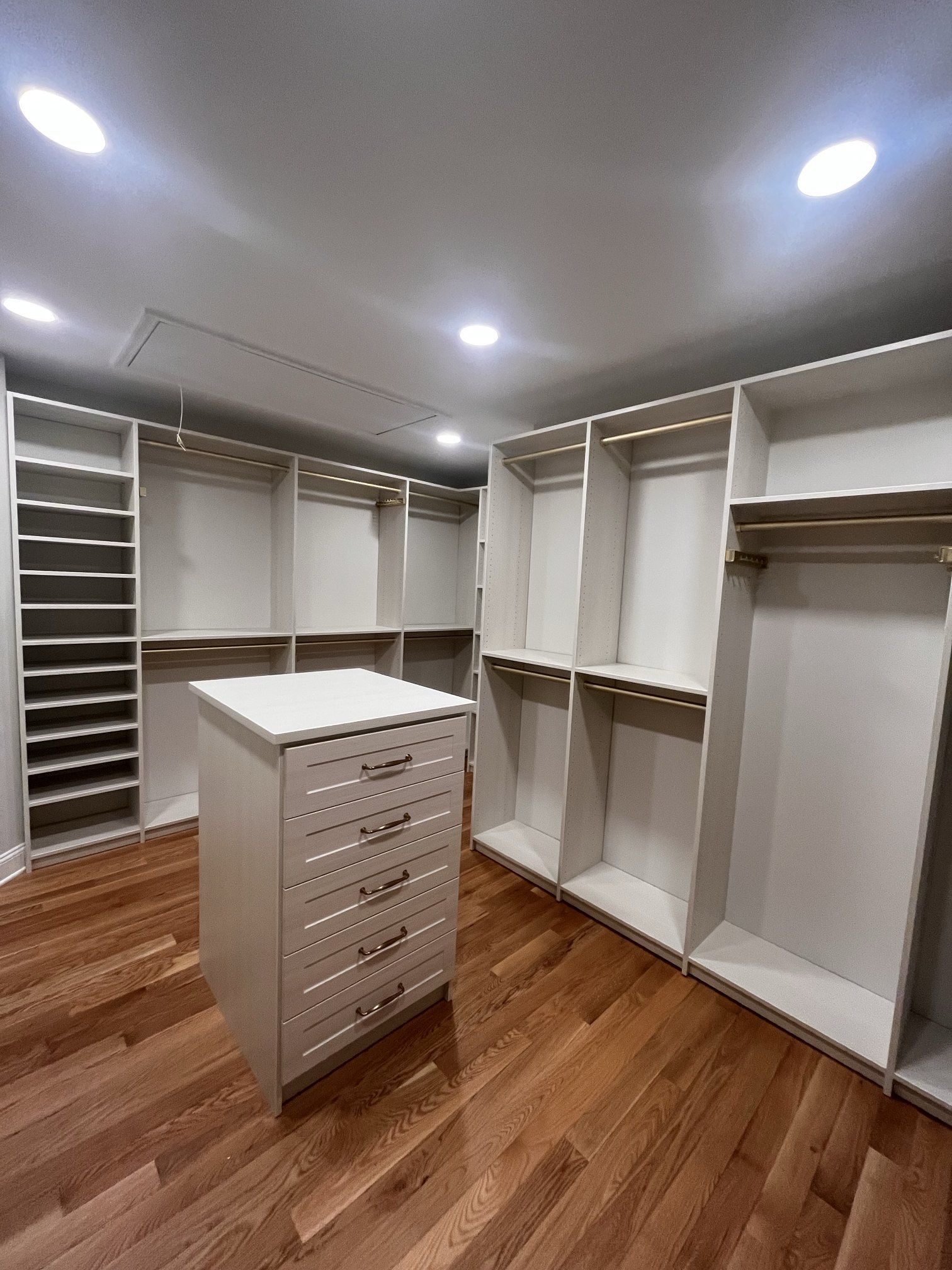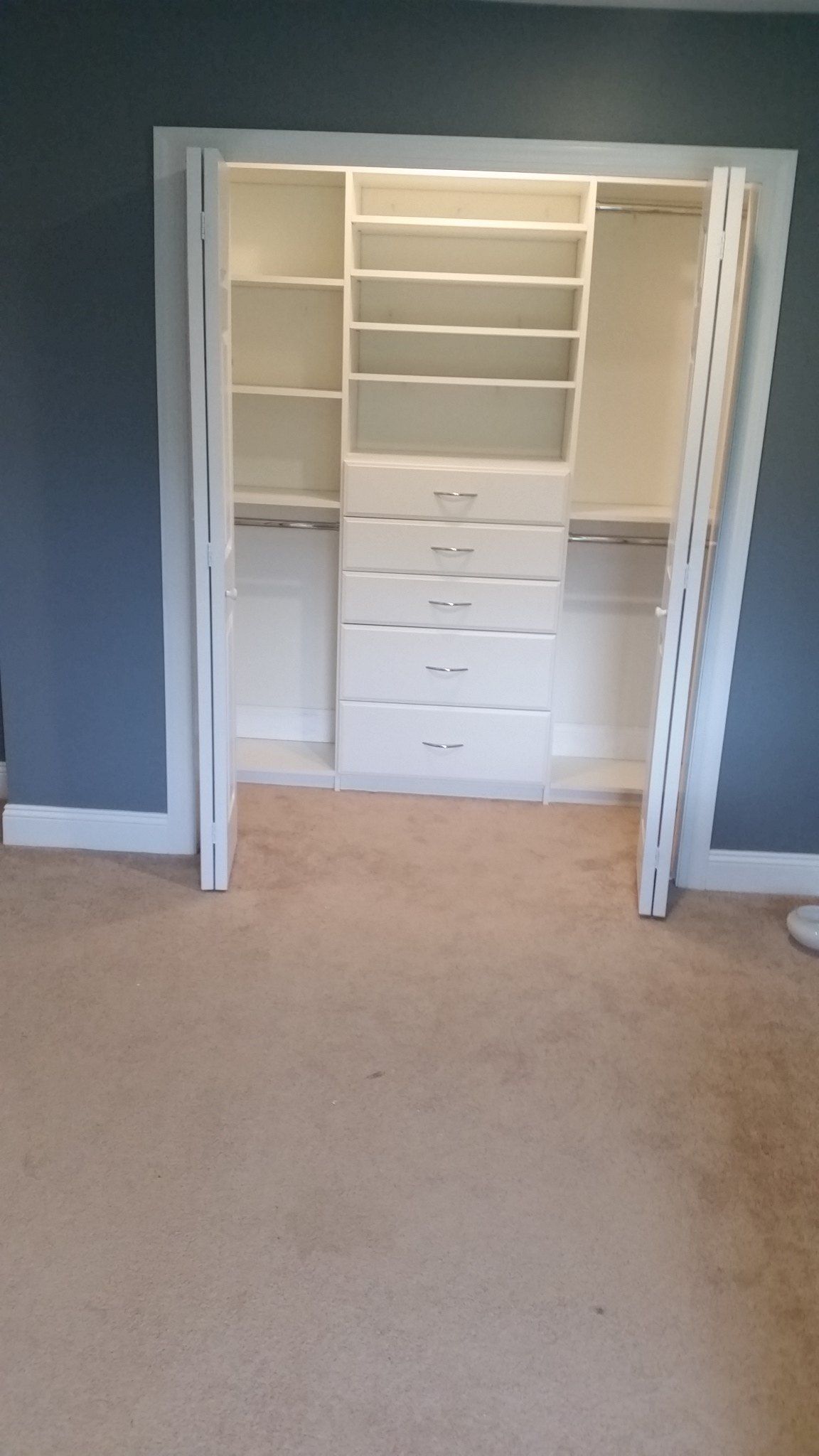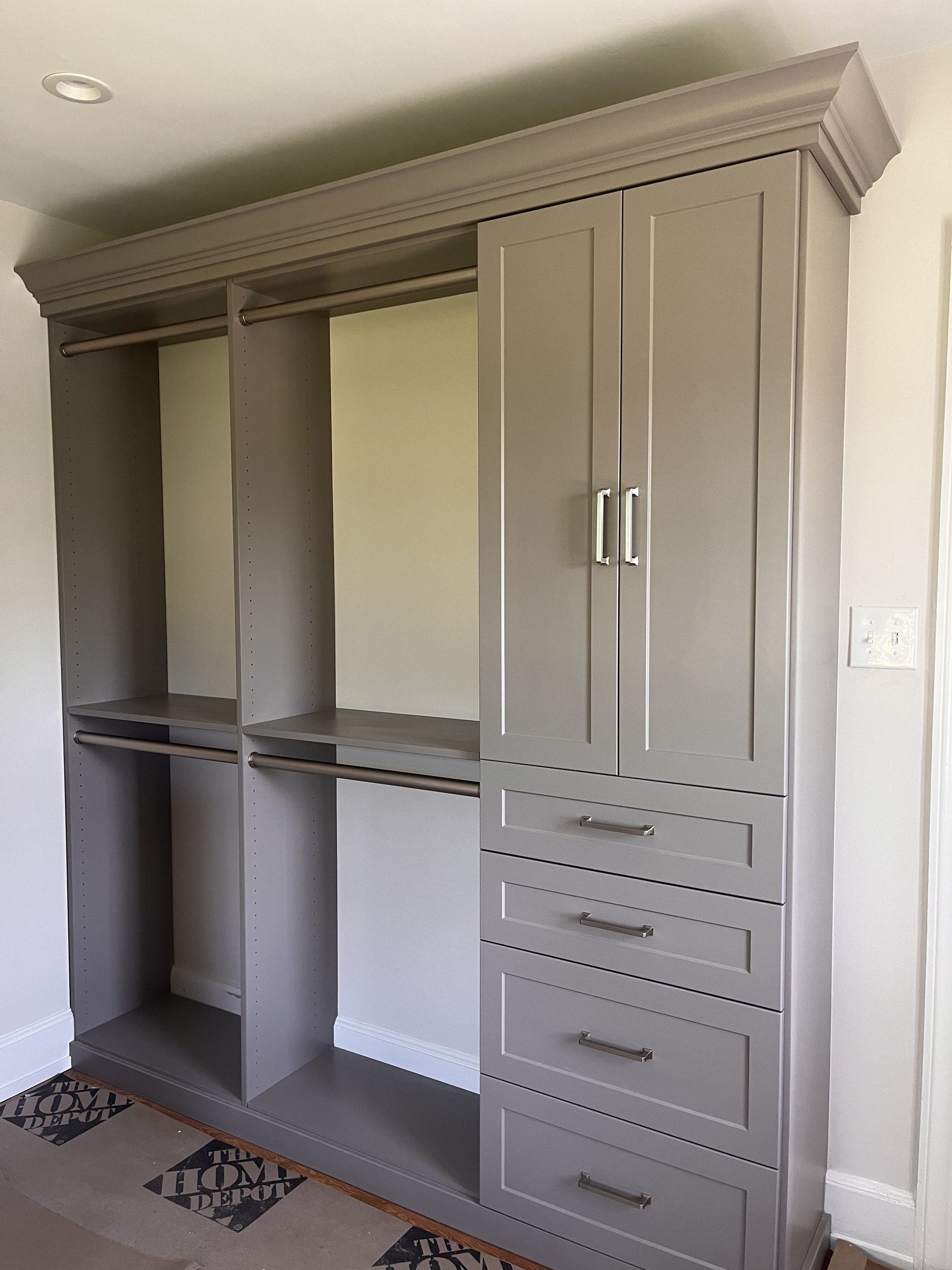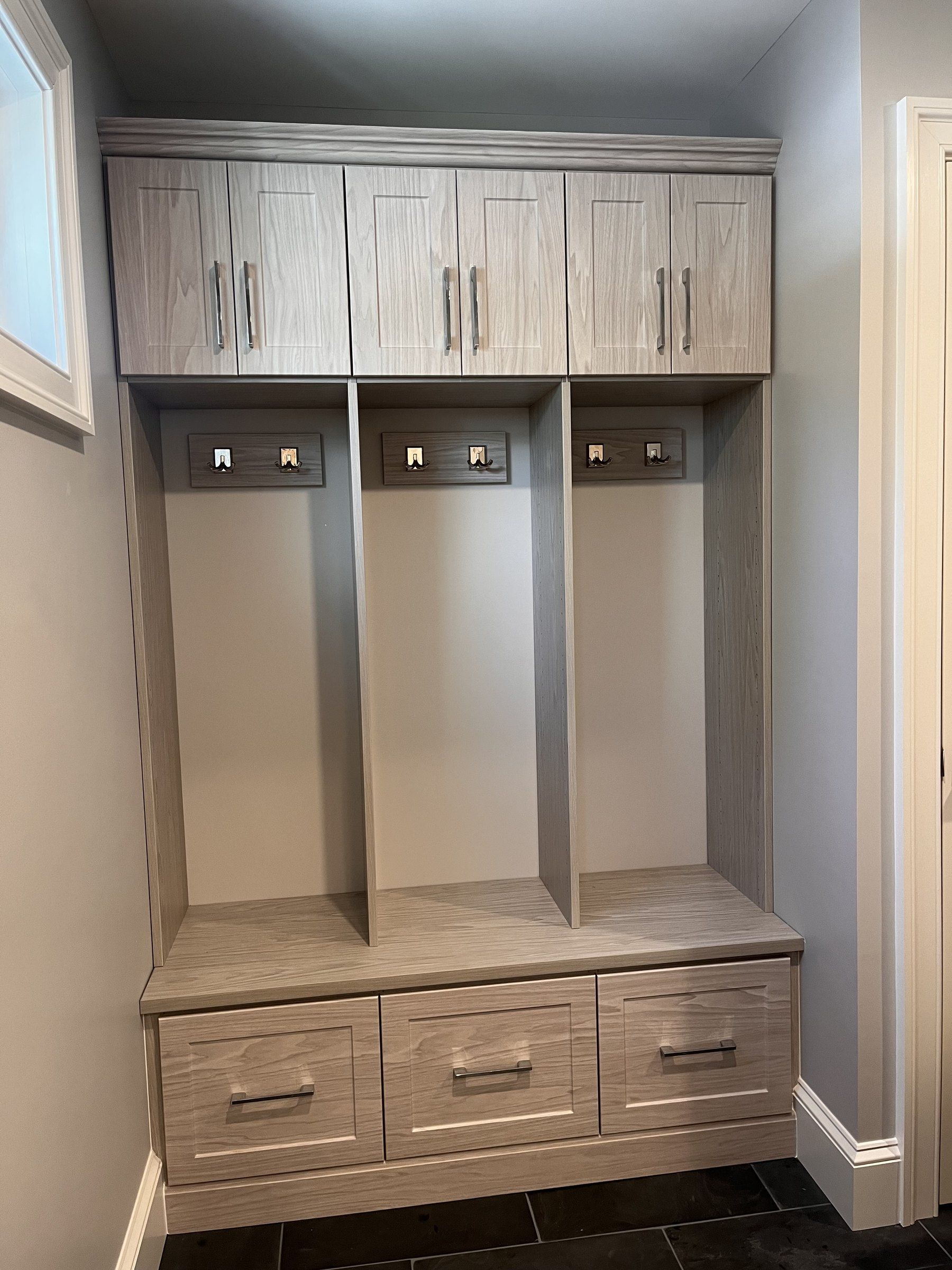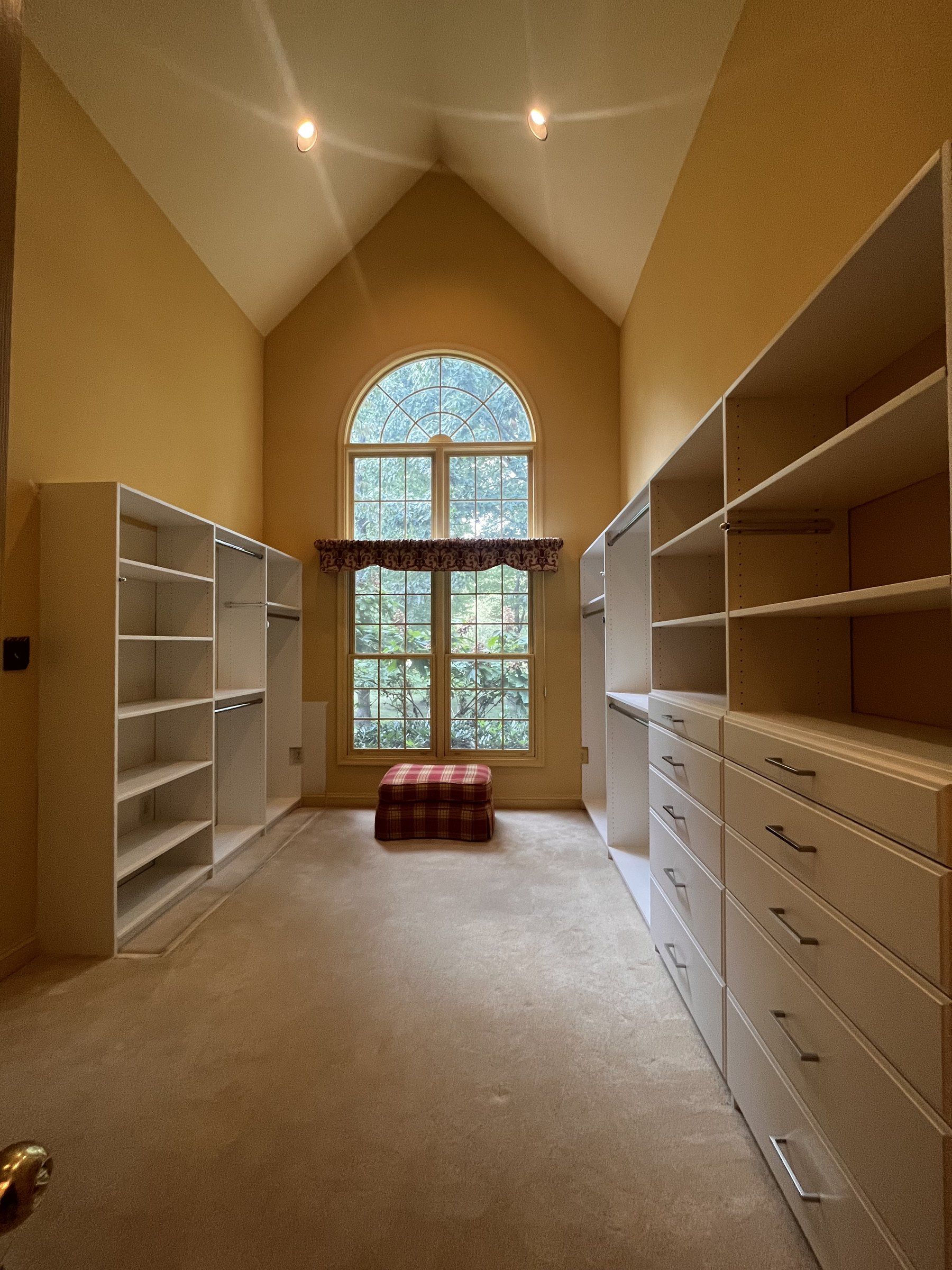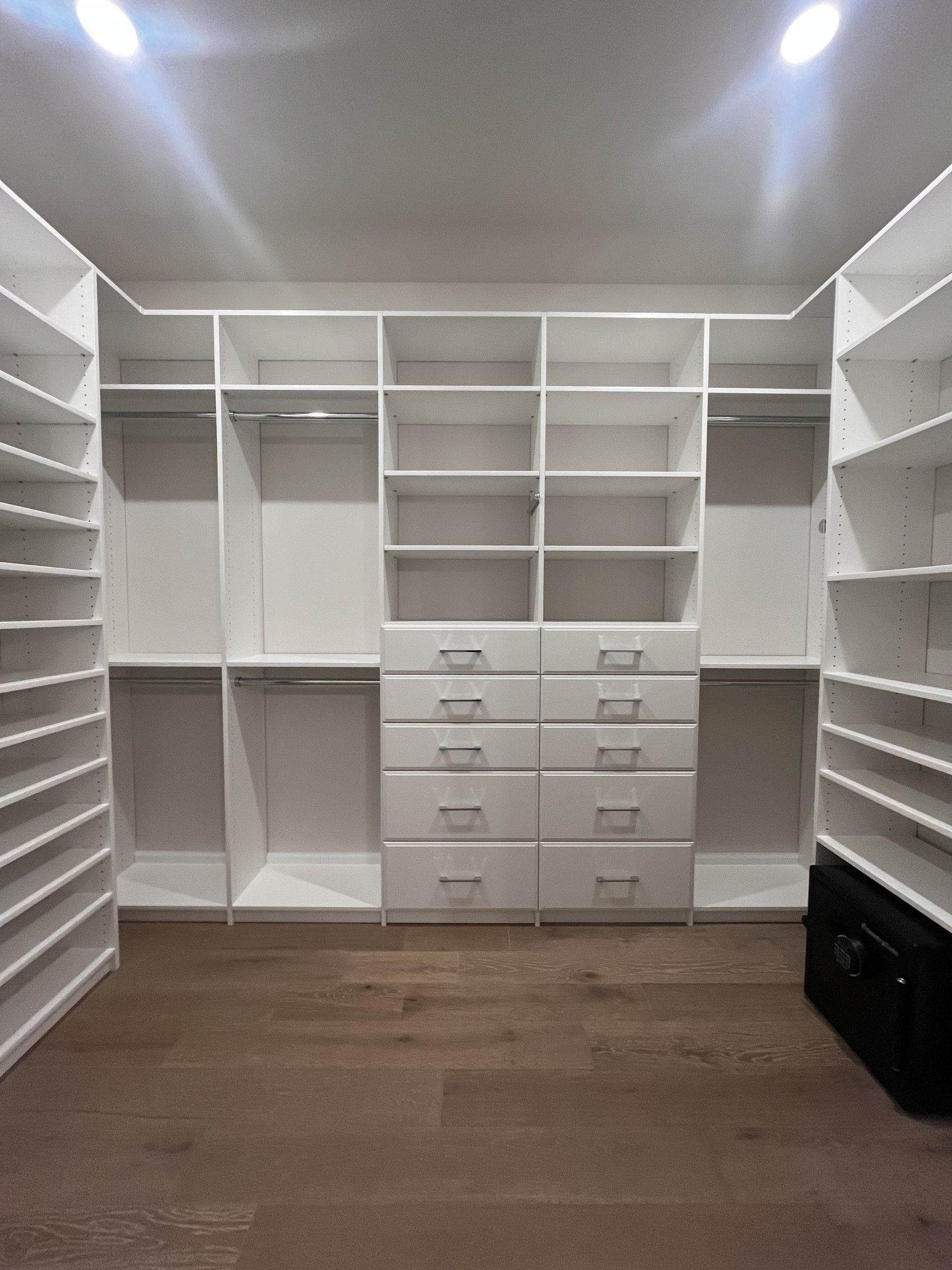
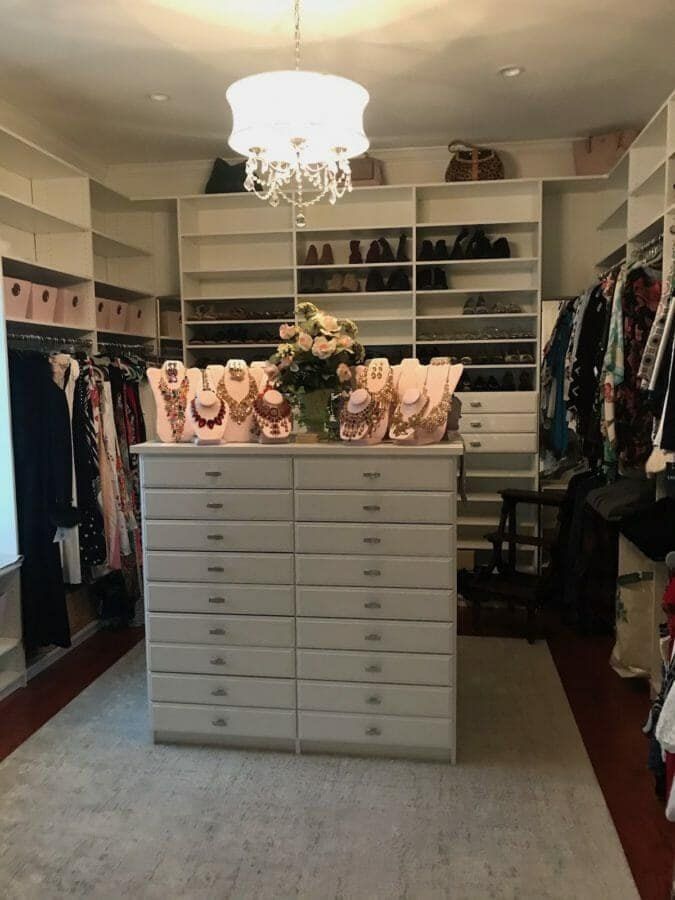
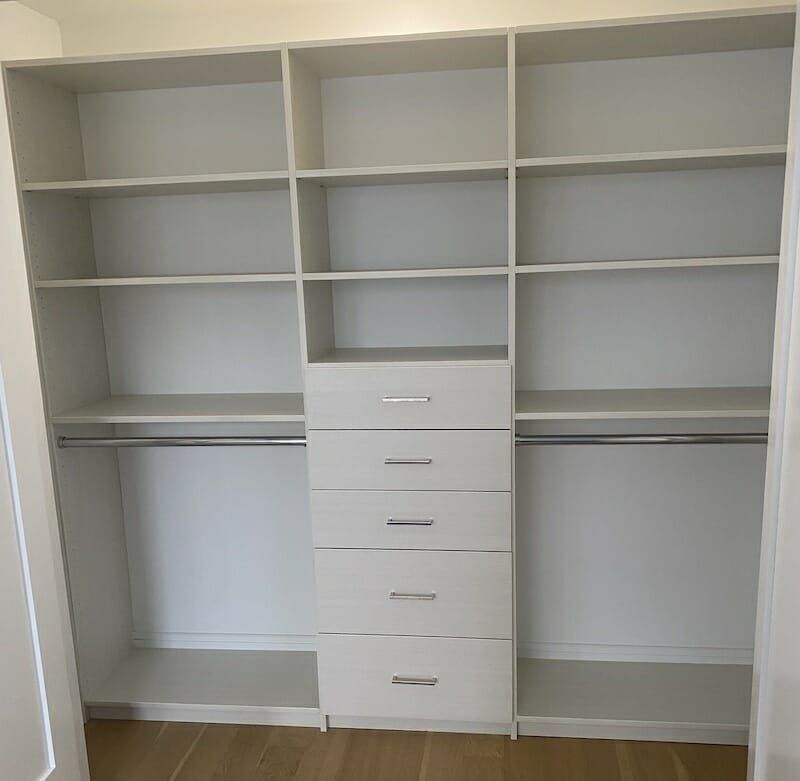
A custom closet system with drawers gives folded clothes and small items a fixed home inside the closet. Closets4Less designs and installs drawer systems for walk-in closets, reach-in closets and wardrobes in Bucks County, Montgomery County and the Philadelphia Main Line. Each drawer is sized to what goes in it, and you see the full layout in 3D at no cost before anything is built.
Why closet systems with drawers prevent clutter relapse
Open shelving looks organized on day one. Over time, stacked clothes shift, piles collapse and small items end up loose on the shelf. Without dedicated zones, the closet slides back to where it started. Drawers create designated spaces that keep clothing categories separated and visible clutter down for the long term.
Functional storage for daily essentials
Drawers suit the items that get disorganized fastest: socks, underwear, workout clothes, pajamas, folded knitwear, jewelry and daily accessories. Separate compartments protect delicate items and make the morning routine faster. Built-in drawers also reduce the need for a dresser in the bedroom, which frees up floor space.
Closet drawer units: stacks, towers and islands
There are three common ways to build drawers into a closet:
| Drawer unit | Where it fits | Typical use |
|---|---|---|
| Drawer stack (3 to 5 drawers) | Reach-in closets, under short hanging | Replaces a small dresser |
| Drawer tower (drawers plus shelves above) | Center of a reach-in or a walk-in wall | Folded clothes below, sweaters and bags above |
| Island | Center of a larger walk-in | Drawers on one or both sides, a counter on top |
A stack fits where hanging space would otherwise run to the floor. A tower adds shelves above the drawers. An island needs clearance on every side, so it suits larger walk-ins. All three are built into the system, so they line up with the rest of the closet instead of sitting in it like loose furniture.
Designing the right drawer layout for your routine
Planning a closet with drawers starts with choosing the right heights for your clothes and habits. A functional layout usually combines three sizes:
- Shallow (about 5 inches): jewelry, socks, belts, watches and accessories
- Medium (about 8 inches): t-shirts, activewear, pajamas and folded daily clothes
- Deep (about 12 inches): jeans, sweaters, bulky garments or integrated hampers
Drawers you use every day should sit between waist and chest height to cut down on bending. Jewelry inserts, adjustable dividers and valet pull-outs personalize the system further. Our guide to closet drawer sizes and layout has measurements for planning your own.
Anatomy of a long-lasting drawer system
A drawer system lasts when the materials, the drawer construction and the installation are all right. Good drawers open smoothly, stay aligned and handle years of daily use without sagging or sticking.
Drawers run on slides, with soft-close options for quieter use. We build with 3/4” furniture-grade boards that stay stable over time, and careful measuring and leveling during installation prevent the uneven movement and early wear common in DIY systems.
Drawers in walk-ins, reach-ins and wardrobes
In a walk-in closet, drawers usually go in a central tower or an island, with a shallow top drawer for jewelry. In a reach-in closet, a drawer stack in the center splits two hanging sections and can replace a dresser in a small bedroom. In a wardrobe, banks of drawers sit behind or below the doors. Hampers and pull-out baskets can go into any of the three.
Specialty drawers and inserts
Drawers do more when the inside is planned too:
- Jewelry inserts with small compartments for rings, earrings and watches, usually in a shallow top drawer.
- Adjustable dividers that keep socks, underwear and accessories in rows instead of piles.
- Pull-out hampers that hide laundry behind a drawer front.
- Pull-out baskets for scarves, hats and workout gear.
- Valet rods that slide out to hold tomorrow’s outfit.
Built-in closet drawers or a dresser?
A dresser takes floor space in the bedroom and duplicates storage the closet could hold. Built-in drawers put folded clothes next to what hangs, so you get dressed in one place. In a small bedroom, moving the dresser into the closet can free enough floor for a desk or a reading chair.
Planning drawers for two people
In a shared closet, drawers work best when each person has their own stack, with a shallow drawer on top for accessories and deeper drawers below. An island can be split down the middle, one side each. We size each stack to that person’s folded clothes, because one partner may fold almost everything while the other hangs most of their wardrobe.
Drawer fronts can match the rest of the closet or contrast with it. Many homeowners pick the same finish for the whole system and change only the hardware, while others use a darker drawer front or island for contrast. You see the drawer layout, finish and hardware in your 3D design before anything is built.
What affects the cost of a closet system with drawers
Drawers cost more than open shelving because they need drawer boxes, fronts, slides and more installation time. The total depends on the number of drawer stacks, drawer size, finish, soft-close hardware, jewelry inserts and other accessories, integrated hampers or pull-outs, and the closet’s size and layout. Many homeowners put drawers in high-use areas and use open shelving in the rest of the closet to manage cost. Our custom closet cost guide explains the other factors.