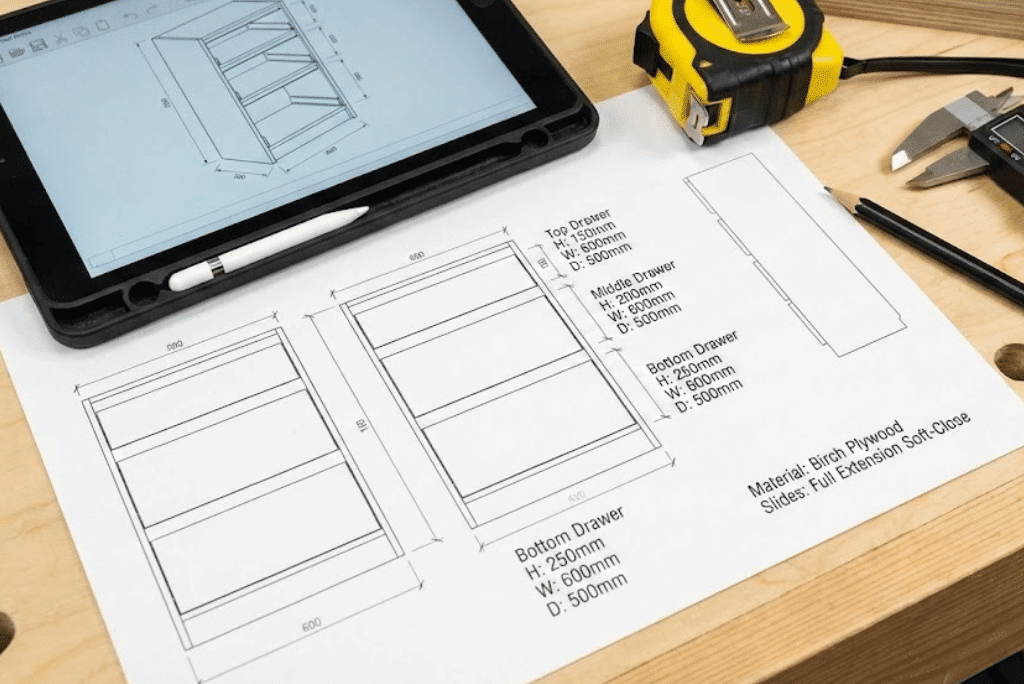
Standard closet drawers are 18, 24 or 30 inches wide and 14 to 24 inches deep, with face heights of 5, 8 and 10 to 12 inches. Fourteen inches deep suits reach-in closets; 20 to 24 inches suits built-ins and walk-ins. Match height to what goes inside: 5 inches for socks and jewelry, 8 for t-shirts, 12 for jeans and sweaters.
Ever open a deep drawer to find a chaotic jumble of socks, or struggle to jam a thick wool sweater into a shallow slot that refuses to close? The problem isn’t usually your folding technique. It is the drawer itself. Most generic closet systems fail because they rely on “standard” default sizes that do not account for the actual dimensions of your clothing.
Ergonomics and visibility are the primary goals of a functional reach-in closet system. You need to see what you own to wear it. If a drawer is too deep, items get buried. If it is too shallow, fabrics snag.
The key to a successful custom closet renovation or DIY project is simple: take inventory first, build second. By mapping your specific wardrobe needs to precise drawer dimensions, you eliminate dead space and frustration.
Standard Closet Drawer Dimensions Explained
Understanding the difference between the box size and the face size is the first step in planning. Don’t assume the measurements on the box label are the actual storage space.
Standard Widths
Most modular systems and custom builds utilize 18-inch, 24-inch, and 30-inch widths. The 24-inch width is often considered the “sweet spot” for closet drawers. It is wide enough to fit two stacks of folded shirts side-by-side, but not so wide that the drawer bottom begins to sag under heavy denim.
Standard Depths
Depth depends heavily on your room layout.
- 14 inches (Shallow): Common in reach-in closets. This depth fits one stack of folded shirts perfectly.
- 20-22 inches (Standard): Typical for most built-ins.
- 24 inches (Deep): Found in full-depth cabinetry. This allows for two stacks of clothing placed front-to-back, doubling your capacity.
Drawer Face Heights vs. Usable Internal Height
This is where many homeowners make mistakes. A drawer with an 8-inch face does not give you 8 inches of storage. You lose space to the bottom of the drawer, the mechanical slides, and the clearance required for the drawer above to open. Expect to lose roughly 1.5 to 2 inches of usable height per drawer.
Related Article: Organize Your Closet and Cabinets
Matching Drawer Heights to Clothing Types
Stop guessing and use these specific mappings to assign your items to the correct vertical space.
The 5-Inch Drawer
This is your accessory zone. Use these shallow drawers for single-layer items that require high visibility.
- Jewelry and watches
- Rolled ties and belts
- Flat-folded socks and hosiery
- Lingerie
The 8-Inch Drawer
Consider this the workhorse of your dresser. It handles the bulk of daily wear items.
- T-shirts (stacked or filed)
- Athletic wear and shorts
- Pajamas
- Leggings
The 10-12 Inch Drawer
Reserve these deep drawers for heavy, bulky fabrics that need breathing room.
- Thick knit sweaters
- Denim jeans
- Blankets and linens
Comparison Table: Face Height vs. Storage
| Drawer Face Height | Approx. Usable Internal Height | Best For |
|---|---|---|
| 5 Inches | 3.5 Inches | Jewelry, Socks, Ties |
| 8 Inches | 6 Inches | T-shirts, Shorts, Activewear |
| 12 Inches | 10 Inches | Jeans, Sweaters, Hoodies |
Folded Clothing Dimensions
Planning a layout requires basic math. If you know the exact dimensions of your folded items, you can calculate exactly how many will fit in a drawer bank.
T-Shirts
A standard folded t-shirt usually measures about 9 inches wide by 10 inches long.
- In a 24-inch wide drawer, you can fit two stacks side-by-side with comfortable clearance.
- In an 18-inch-wide drawer, you can only fit one stack, leaving significant wasted space on the sides.
Denim
A pair of jeans, when folded, is roughly 9-10 inches wide and 2-3 inches high. If you plan to stack four pairs of jeans, you need a drawer with at least 10-12 inches of internal clearance. Squeezing them into an 8-inch drawer will cause the fabric to catch on the frame every time you open it.
File Folding vs. Stacking
Using the “file folding” method (standing clothes upright, like the KonMari method) changes your depth requirements. This technique requires less vertical height but demands that you fill the drawer depth-wise to keep items standing.
Optimal Drawer Bank Layouts
Once you know your sizes, you must decide how to stack them visually.
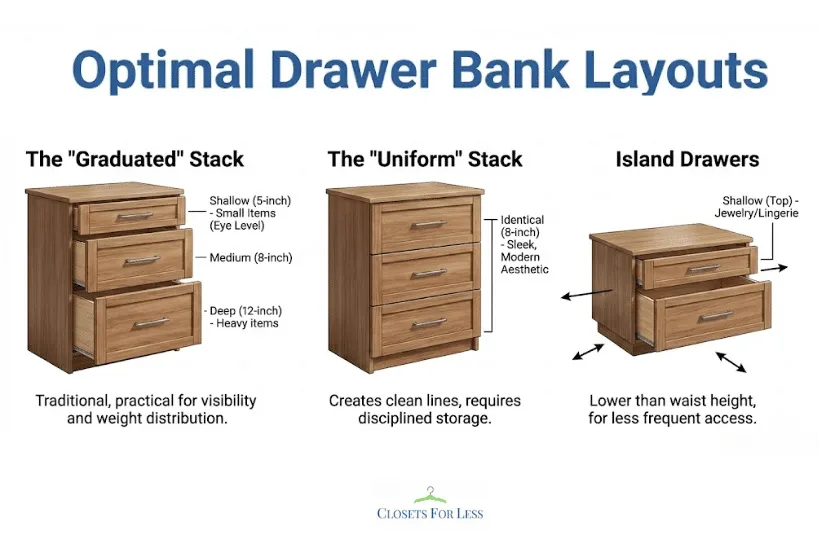
The ‘Graduated’ Stack
This is the traditional approach. You place shallow drawers (5-inch) at the top for small items, followed by medium drawers (8-inch) in the middle, and deep drawers (12-inch) at the bottom. This places small, hard-to-see items closer to eye level and heavy items near the floor.
The ‘Uniform’ Stack
For a sleek, modern aesthetic, use identical drawer face heights (usually 8 inches) for the entire bank. This creates clean lines but requires you to be more disciplined with what you store inside.
Island Drawers
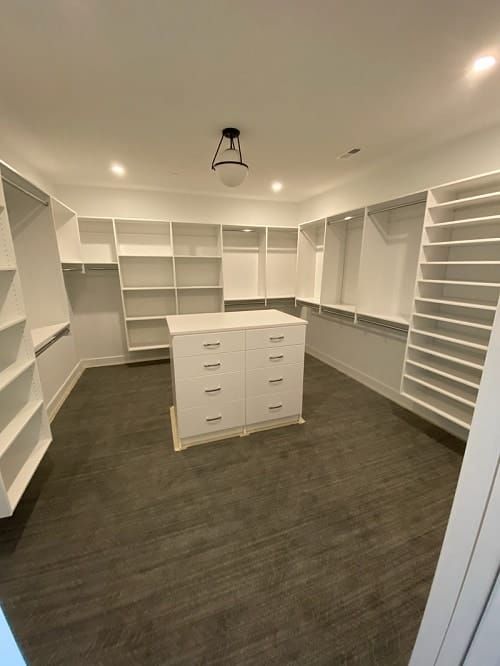
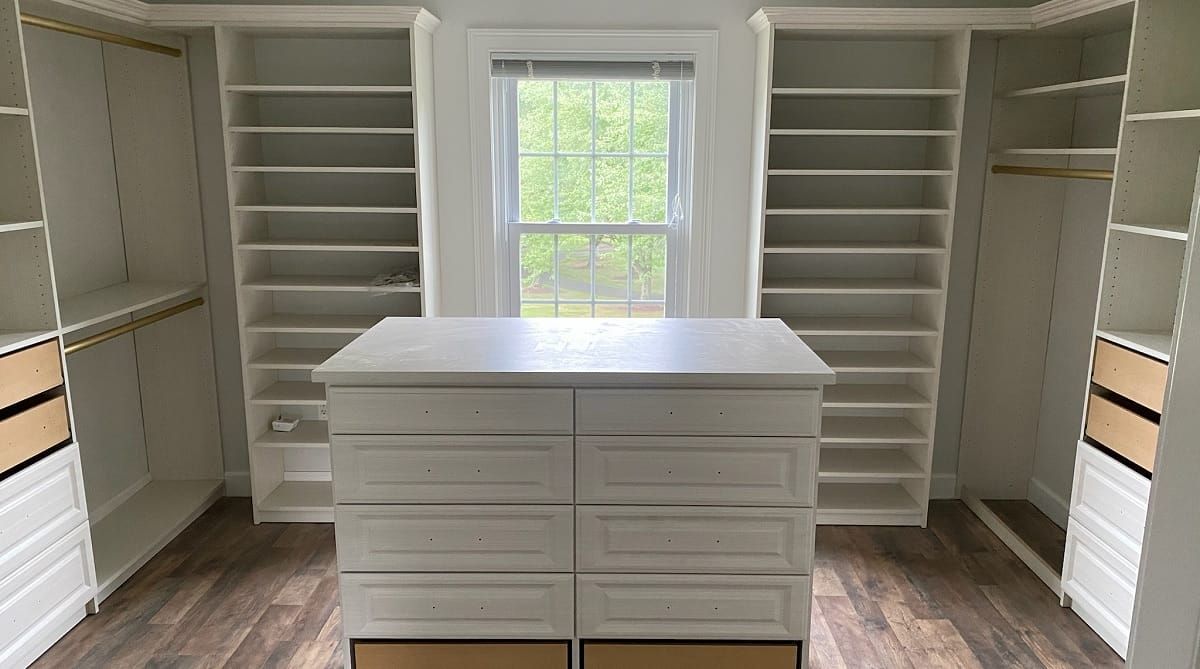
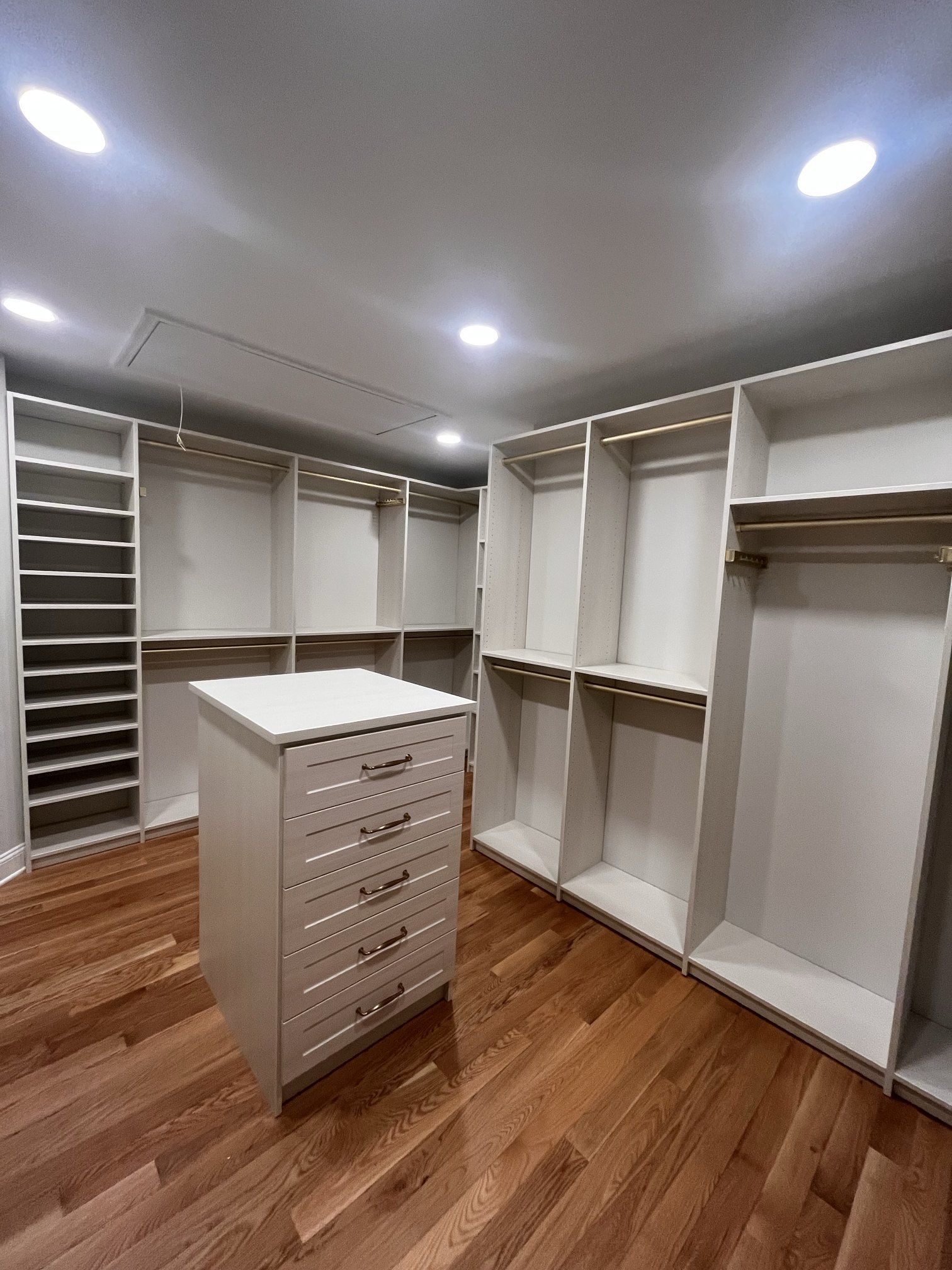
If you are designing a walk-in closet island, remember that you can access it from multiple sides. However, island drawers are typically lower than waist height, making them ideal for jewelry (top) and lingerie, but less ideal for items you access constantly.
Related Article: Mudroom Storage Ideas for a More Organized Entryway
The Vertical Zone: Where to Place Your Drawers
Ergonomics dictates placement. The “Golden Zone” for drawers is from the floor up to 48 inches.
Never install drawers above shoulder height. If a drawer is too high, you cannot see down into it, rendering it useless. The space above 48 inches is better suited for hanging rods or open shelving, where you can view items from the front.
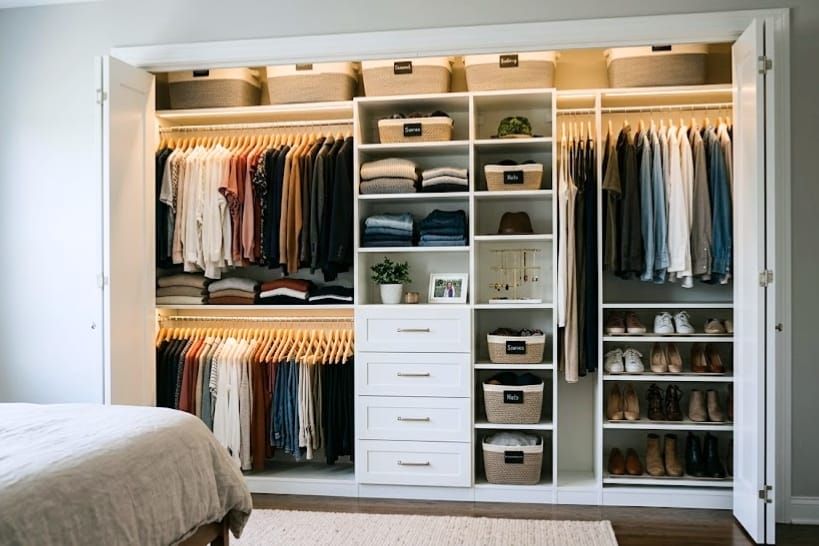
If you want to integrate drawers with hanging space, consider a “hutch” style layout. This places a bank of drawers at the bottom with a countertop at waist height, leaving the upper section open for hanging clothes or shelves.
Hardware Matters: Slides, Fronts, and Clearance
The hardware you choose affects your physical storage volume.
Undermount vs. Side-Mount Slides
- Side-Mount Slides: These attach to the sides of the drawer box. They are cost-effective but reduce your usable drawer width by approximately 1 inch (0.5 inches per side).
- Undermount Slides: These hide underneath the box. They maximize width but may reduce internal vertical depth slightly. They are often smoother and offer a higher-end look.
Handle Projection
Don’t forget the handles. If you have drawers in a corner or behind a closet door, verify that the handle projection does not stop the drawer from opening or bang into the adjacent wall.
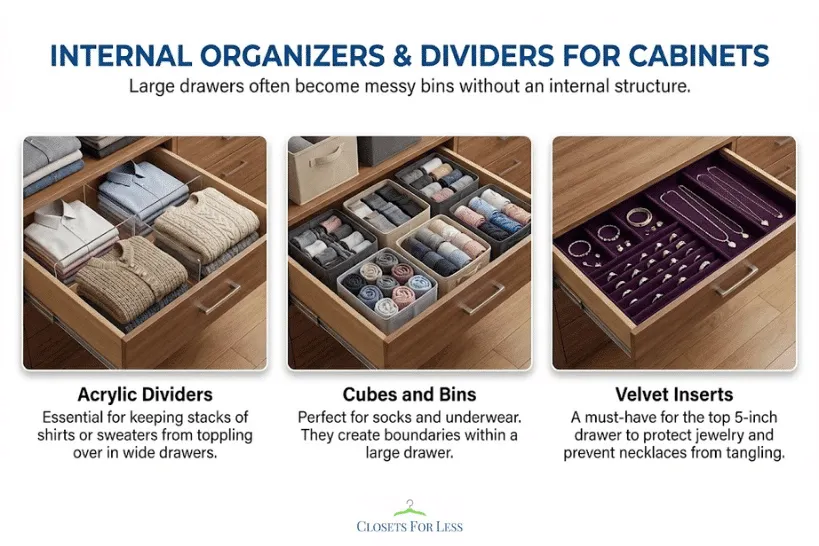
Internal Organizers and Dividers
Large drawers often become messy bins without an internal structure.
- Acrylic Dividers: essential for keeping stacks of shirts or sweaters from toppling over in wide drawers.
- Cubes and Bins: perfect for socks and underwear. They create boundaries within a large drawer.
- Velvet Inserts: A must-have for the top 5-inch drawer to protect jewelry and prevent necklaces from tangling.
Related Article: 10 Custom Closet Trends
Common Closet Drawer Mistakes to Avoid
- Making Drawers Too Wide: A 36-inch wide drawer looks impressive, but once filled with denim, the bottom may bow, or the slides may fail. Stick to 24-30 inches max unless you use reinforced bottoms.
- Ignoring Pull-Out Clearance: In tight walk-in closets, verify you have enough room to stand in front of the drawer when it is fully extended (usually 20-24 inches of standing clearance, in addition to the drawer’s full extension); check slide travel and anything next to the drawer.
- Overstuffing: Fabrics need to breathe. Jamming clothes into a drawer creates wrinkles and damages fibers. Leave an inch of clearance at the top.
Finalizing Your Layout
A great closet starts with a tape measure. Before you buy a modular system or hire a carpenter, measure your folded stacks. Count your jeans. Tally your t-shirts. Knowing your inventory allows you to choose the right mix of 5, 8, and 12-inch drawers.
Ready to reclaim your space? Start by measuring your current wardrobe inventory today to determine exactly how many standard closet drawer dimensions you need for your renovation.
If you would rather have the drawers sized to your inventory for you, Closets For Less designs and installs custom closet drawer systems in Bucks County, Montgomery County and the Philadelphia area, starting with a free in-home design consultation. For budgeting, see our guide to what custom closets cost.