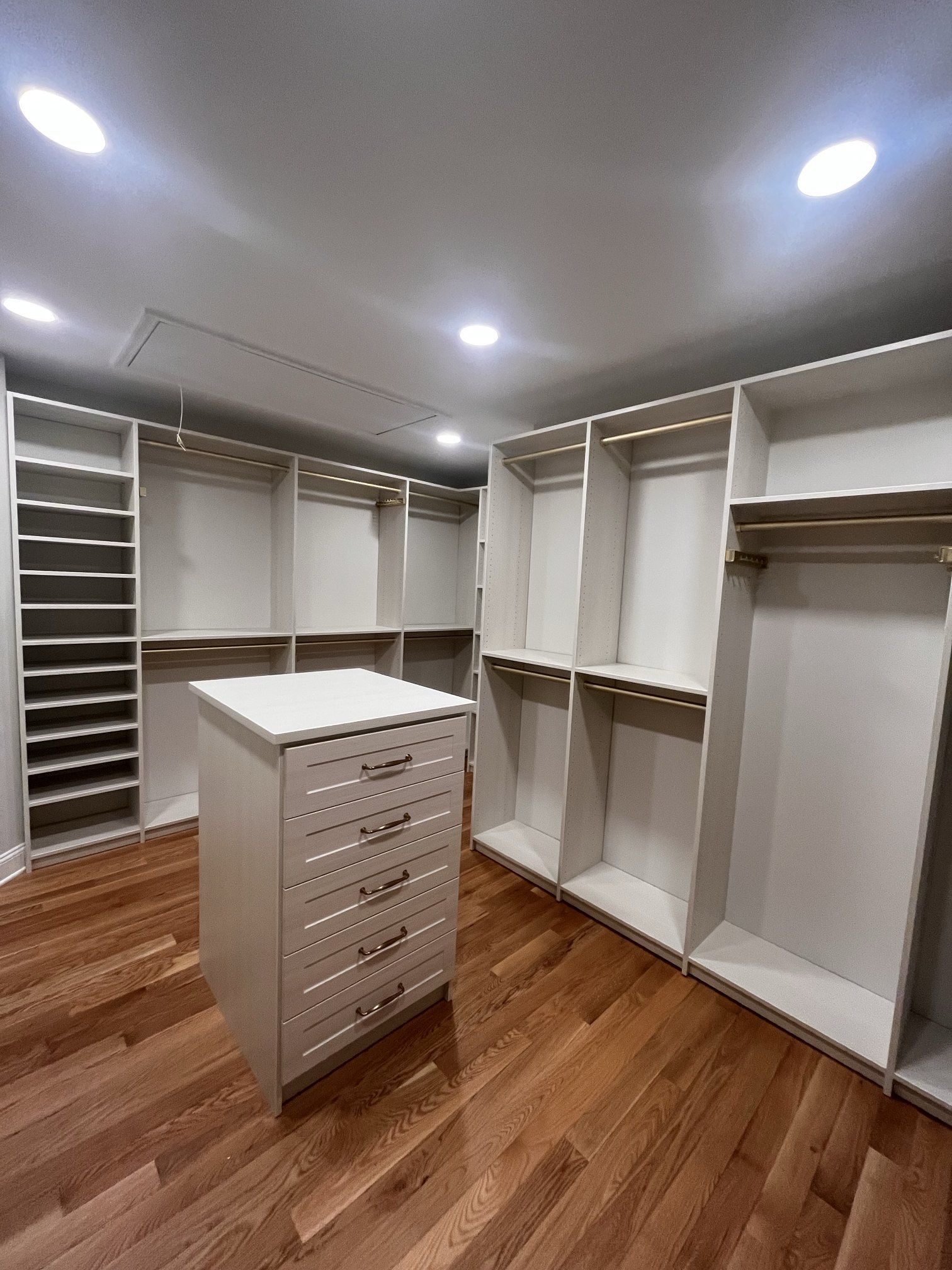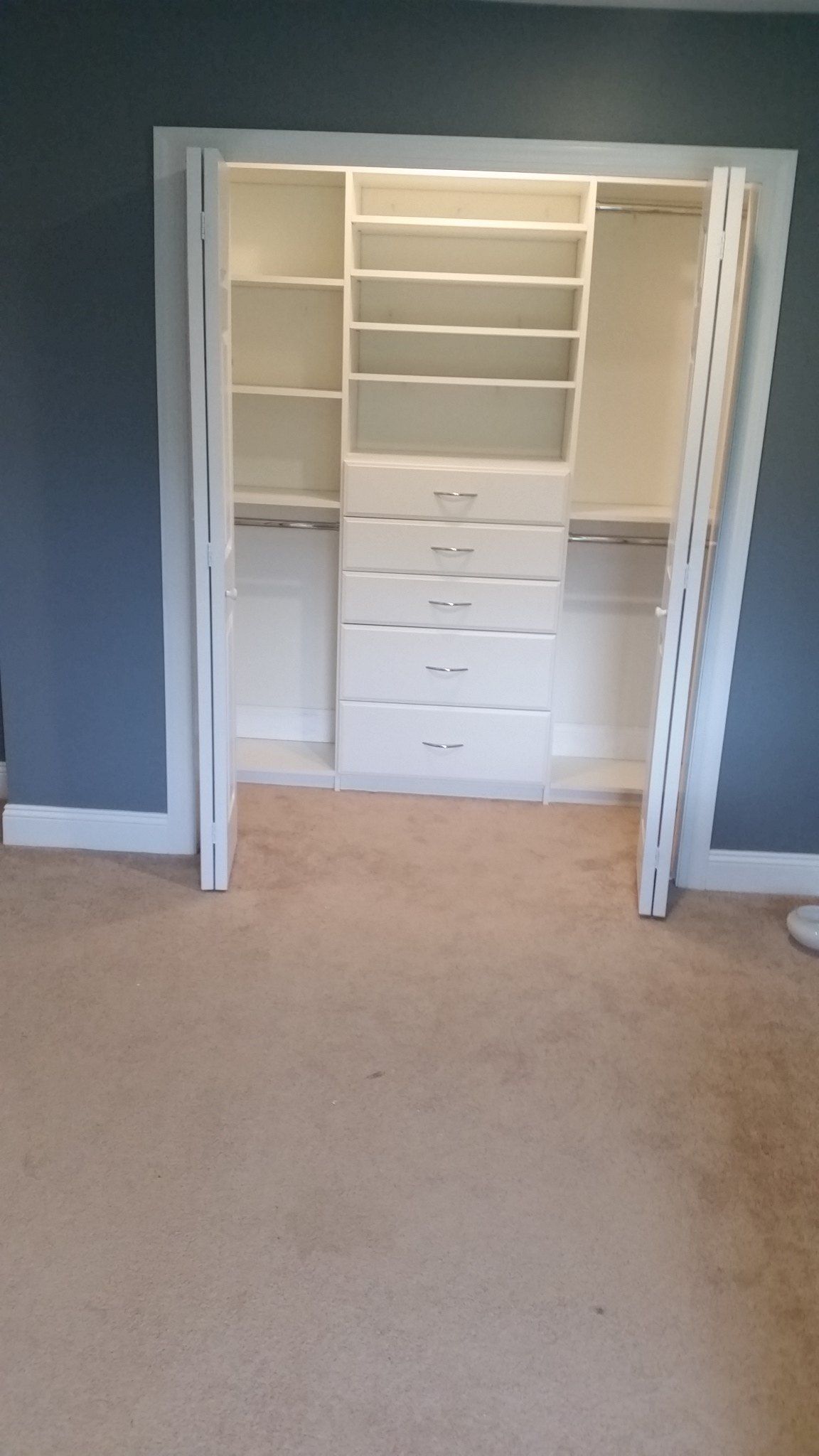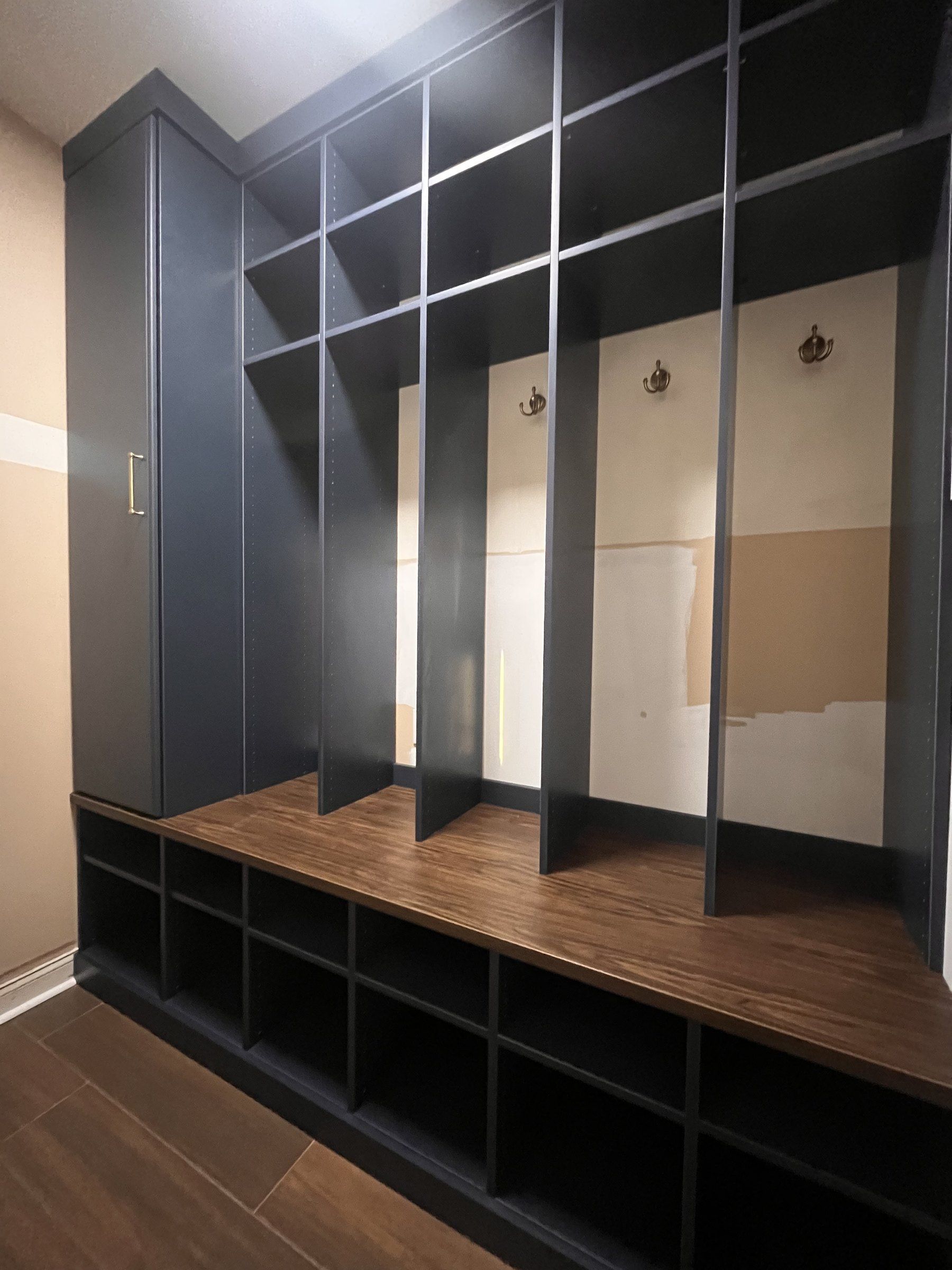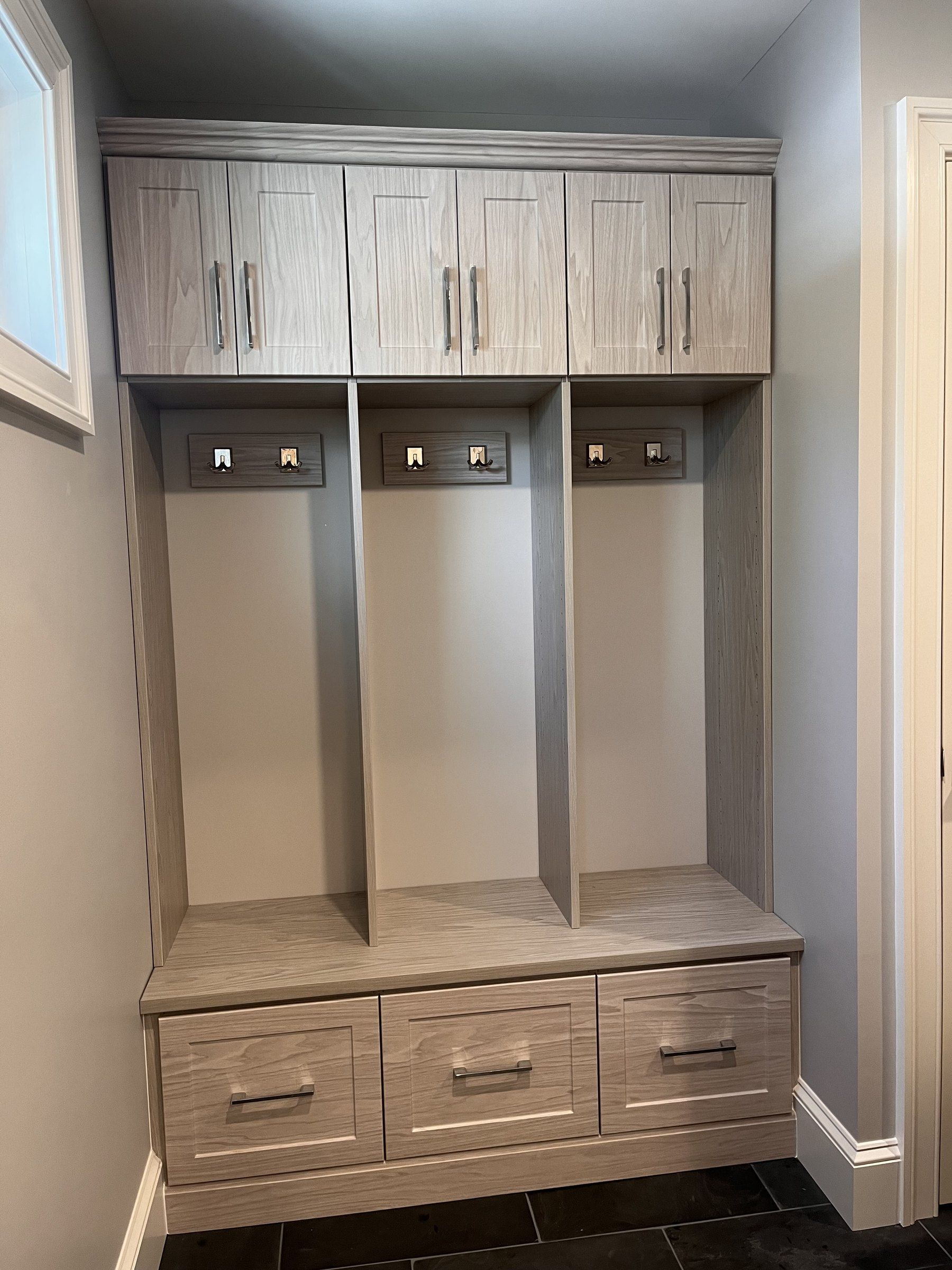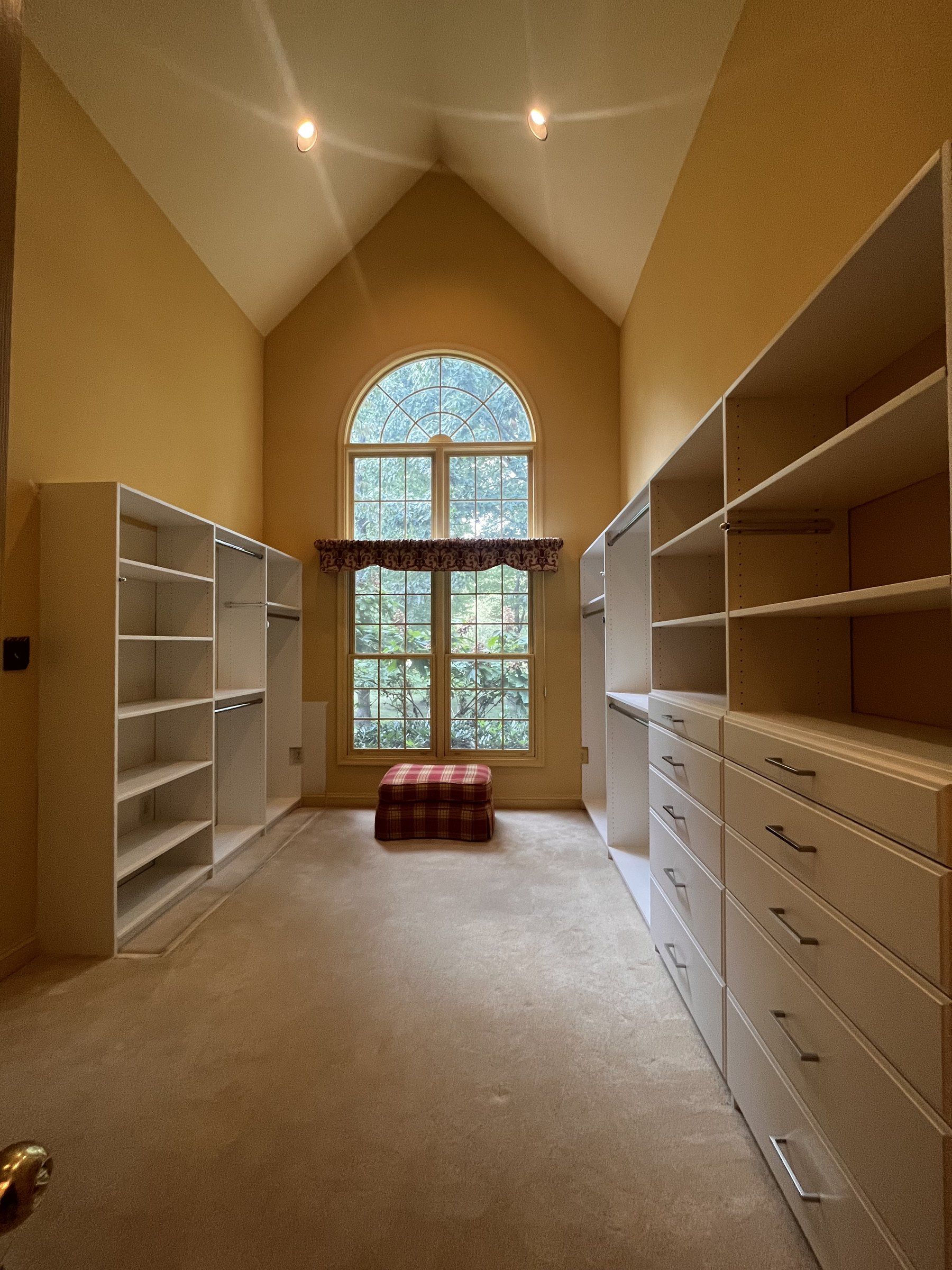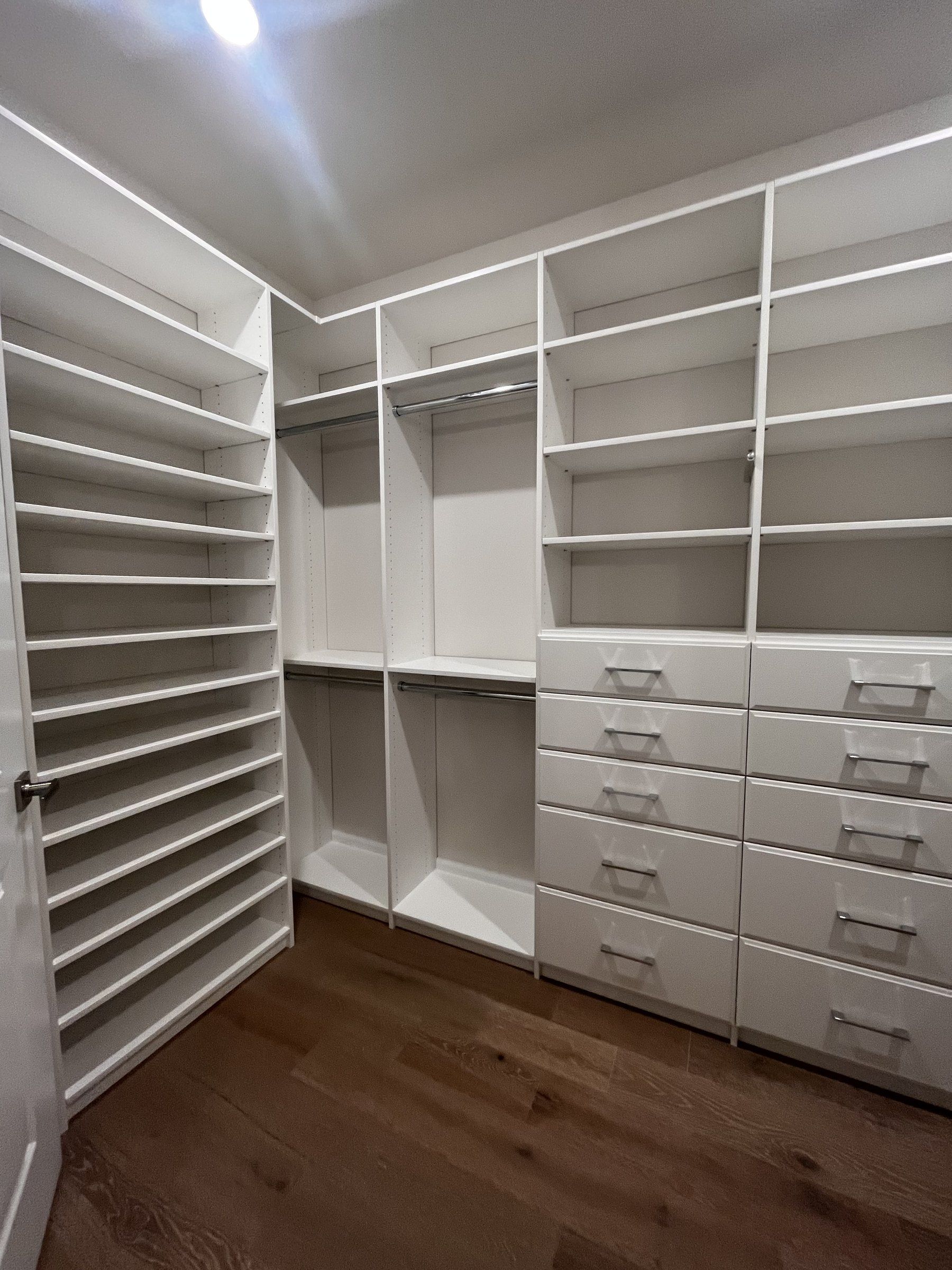
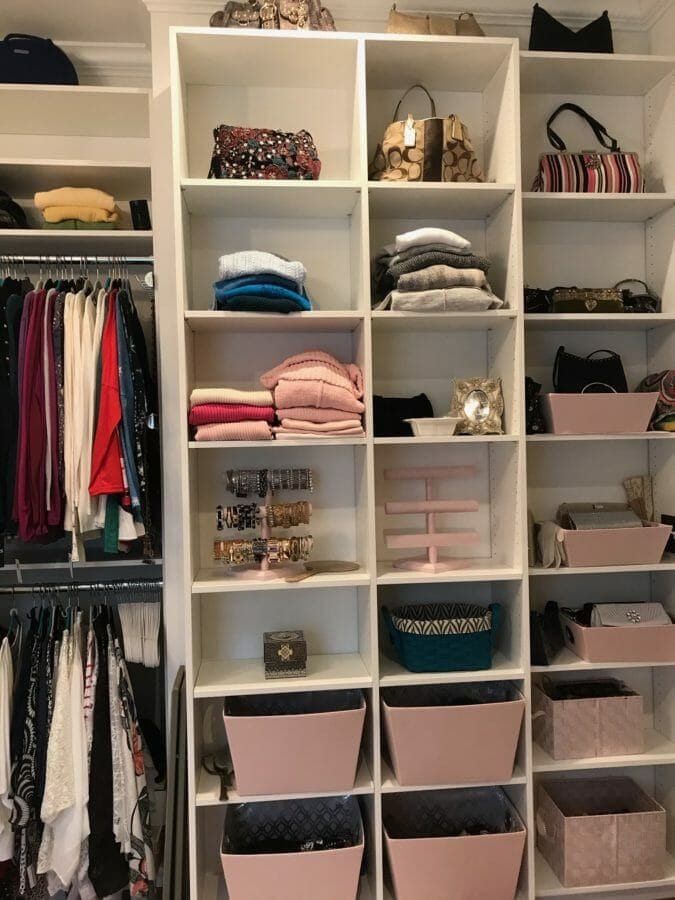
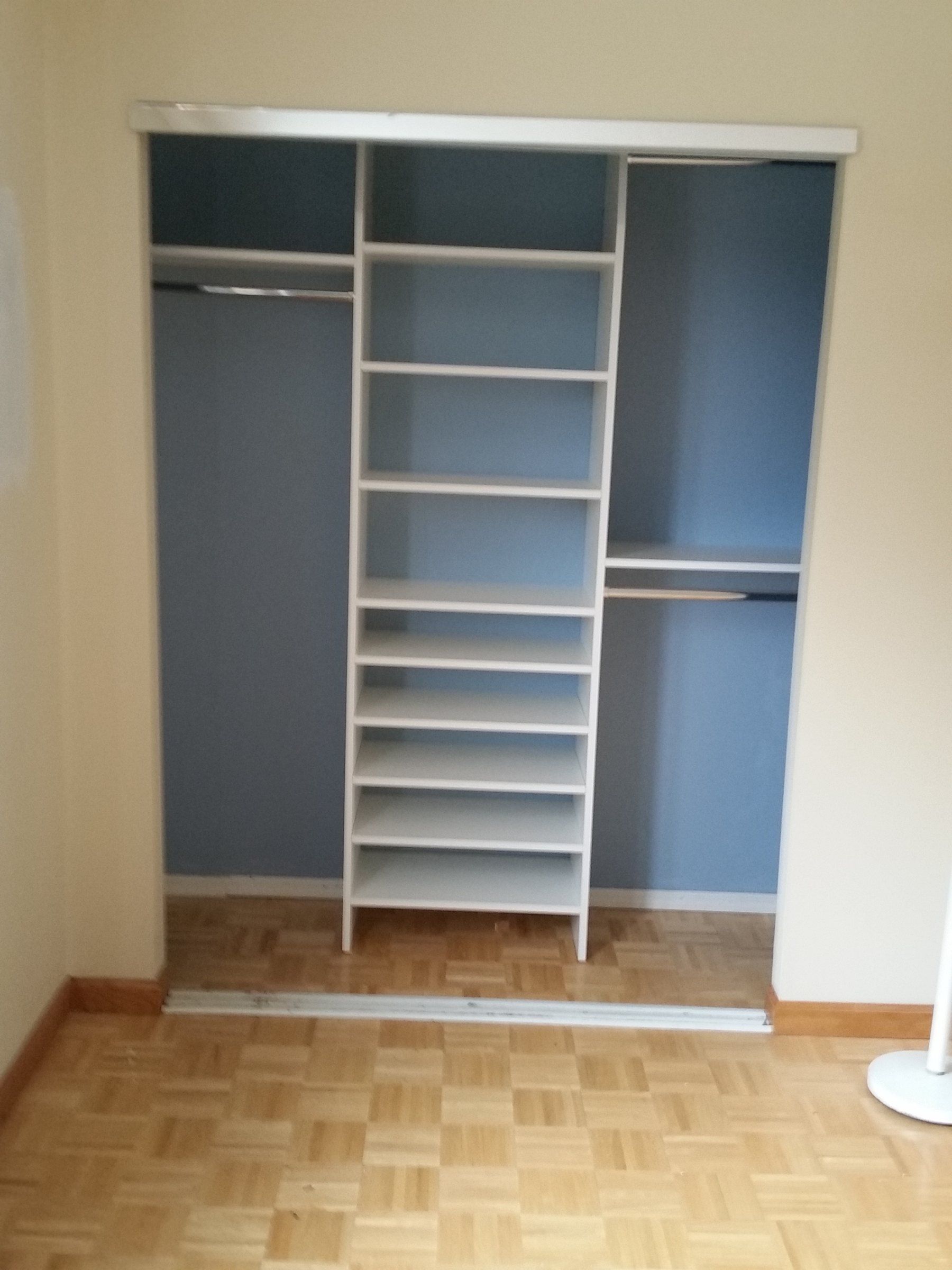
A custom shoe closet gives every pair a defined spot, sized to the shoes you own. Closets For Less designs and installs shoe storage in Bucks County, Montgomery County and on the Main Line, inside walk-in closets, reach-in closets, mudrooms and entries. Since 2007 we have built storage around how people actually use their shoes, starting with a free in-home consultation.
Shoe storage built around your collection
The right shoe closet balances daily convenience with protection for the pairs you wear less. Work shoes and sneakers belong where you grab them on the way out. Seasonal boots and occasion shoes can go higher or deeper. At the consultation we count your pairs and measure the tallest and widest ones, because shelf spacing is what makes or breaks shoe storage.
Shoe storage options
Every shoe closet we design mixes a few of these:
- Angled shelves with a heel stop. Pairs face out so you can see them at a glance. Best for dress shoes and heels.
- Flat adjustable shelves. Hold the most pairs per foot of wall. Best for sneakers, flats and boots.
- Cubbies. One pair per opening, so pairs stay together. Good for kids and for shared closets.
- Tall boot sections. Full-height openings so knee-high and riding boots stand without folding over.
- Pull-outs. Slide forward in deep closets so you can reach the back row.
- Integrated lighting. Makes dark corners and deep shelves easy to see.
Shoe storage by space
| Space | What usually works |
|---|---|
| Walk-in closet | A full shoe wall with angled and flat shelves near where you sit |
| Reach-in closet | A narrow shoe tower or shelves under short hanging |
| Mudroom or garage entry | Open cubbies and a bench with shoe storage below |
| Front entry or hall closet | Shelves in the lower half, long hang above for coats |
| Bedroom wardrobe | Shoe shelves behind doors, below drawers |
For more ideas, our guides to custom shoe closets and boot storage ideas show layouts that work in different rooms.
Materials for shoes that come in wet
Pennsylvania winters bring rain, slush and road salt straight to the door, and that is hard on storage. Wire racks rust and thin laminates swell when wet shoes sit on them. We build with 3/4” furniture-grade boards that resist moisture and wipe clean, and we plan the layout for wet weather:
- Lowest shelves raised off the floor so damp boots do not sit on carpet or tile.
- Open shelf spacing so air can move and shoes dry.
- Lower zones designed to be wiped down often.
- A drop zone at the entry so wet footwear stops at the door instead of reaching bedroom closets.
If your shoe problem starts at the back door, a mudroom with lockers and a bench may solve it better than a bigger closet.
How much shoe storage do you need?
Count every pair, including the ones by the door and under the bed, then add room to grow. Note how many pairs are tall boots, heels and bulky sneakers, because they take more space than flats. We use that count to set the number of shelves and the spacing between them. Adjustable shelves matter here: your collection in January is not the same as in July, and you can move shelves to fit boots in winter and sandals in summer.
Shoe storage for busy households
In a family home, most shoes never make it to a bedroom closet. They pile up at the back door. A cubby per person at the entry, with a bench to sit on and a boot tray for wet days, keeps everyday shoes in one place. Seasonal and dress shoes can then move to bedroom closets, where angled shelves and pull-outs keep them visible and protected.
Shoe walls inside walk-in closets
In a walk-in closet, shoes usually get one wall or one section of a wall, close to where you sit to put them on. We pair the shoe wall with a drawer bank or island and plan it with the rest of the closet. See our walk-in closet design page for how the whole room comes together.
Keeping shoes in good condition
Shoes last longer when they are stored well. Give dress shoes and heels enough height that nothing presses on them, keep leather out of direct sunlight, and leave space between pairs so they can breathe. Boots keep their shape when they stand upright in a tall section instead of folding over. Put the pairs you wear most at the most convenient height, so the rest are not knocked around every morning.
Handbags, belts and hats often end up on the shoe shelves because they have nowhere else to go. We can plan cubbies or shelves for them next to the shoes, so accessories have their own place and the shoe shelves stay for shoes.
Pricing for a custom shoe closet
Pricing is set during your free design consultation because every system is built to the size of your walls. Cost depends mostly on the width of the space, the number of shelves and pull-outs, lighting, and the finish you choose. As a locally owned company, we give you a written estimate with your design so you can adjust it before you decide. Our custom closet cost guide explains the factors in more detail.