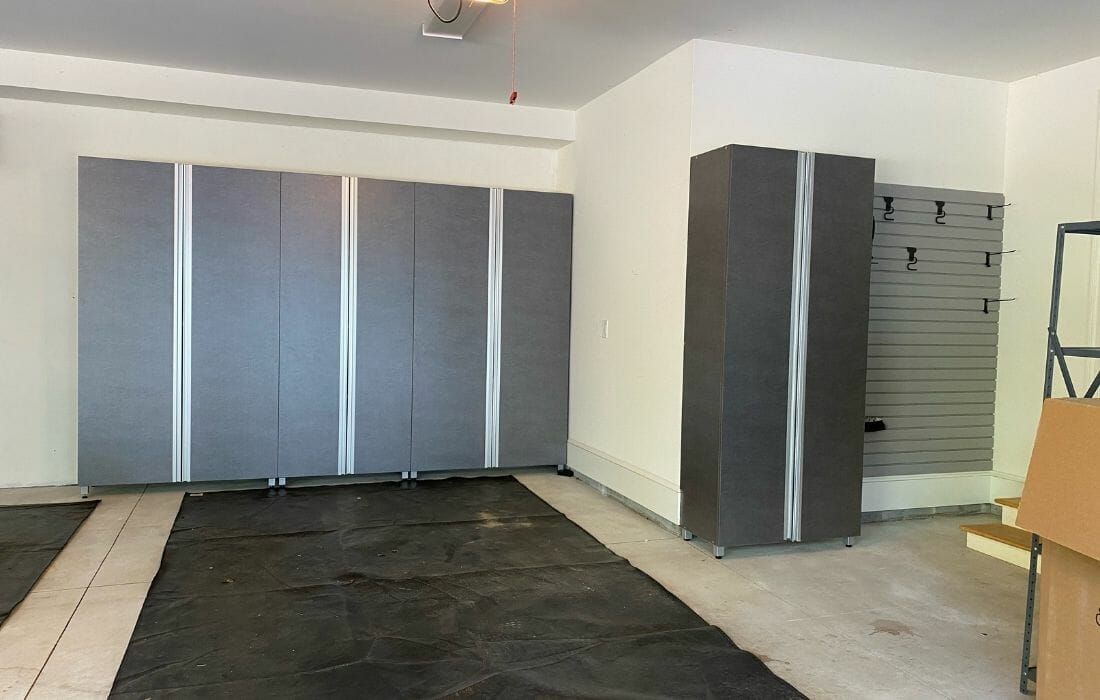
The best garage storage closet ideas combine three things: tall cabinets for anything that should be closed away, open shelving for bins, and slatwall for tools and long-handled gear, all kept off the floor. In Bucks and Montgomery County garages, that last part matters because of humidity, snowmelt and road salt. Closets For Less designs and installs garage cabinets, workbenches and slatwall, starting with a free in-home consultation.
Map your garage storage zones before buying a shelf
Buying bins first is the most common mistake. They end up blocking car doors or stacked in front of what you actually need. Start with a plan:
- Clear one wall and take inventory. Group what you find: car supplies, tools, lawn and garden, sports gear, holiday decorations, overflow pantry items, clothes.
- Assign zones by how often you use them. Daily items at chest height near the door to the house. Seasonal items up high. Heavy items low, but raised off the slab.
- Measure the clearances. Ceiling height, wall widths, steps, the water heater, and how far your car doors swing open.
Cabinets, shelving or slatwall: what each is for
No single product organizes a whole garage. The storage that works best uses each one for what it does well:
| Storage type | Best for | Watch out for |
|---|---|---|
| Tall cabinets with doors | Paint, chemicals, power tools, clothes, anything to keep clean or away from kids | Depth that blocks car doors |
| Open shelving | Labeled bins, bulk supplies, seasonal items | Dust on anything left uncovered |
| Slatwall panels | Rakes, shovels, ladders, cords, bikes, sports gear | Overloading hooks past their rating |
| Workbench | Projects and repairs, with drawers below | Placing it where the car door hits it |
| Overhead racks | Light, rarely used items such as holiday bins | Ceiling height and garage door clearance |
Garage closet layouts that work in most homes
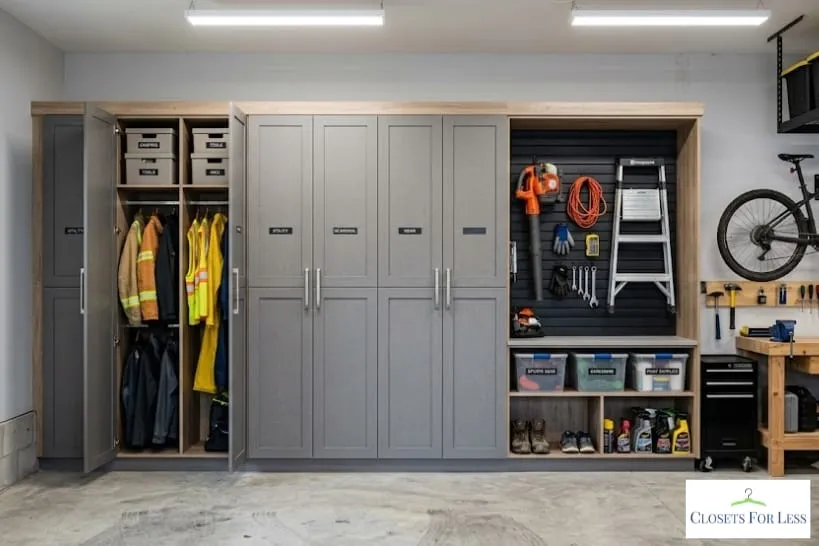
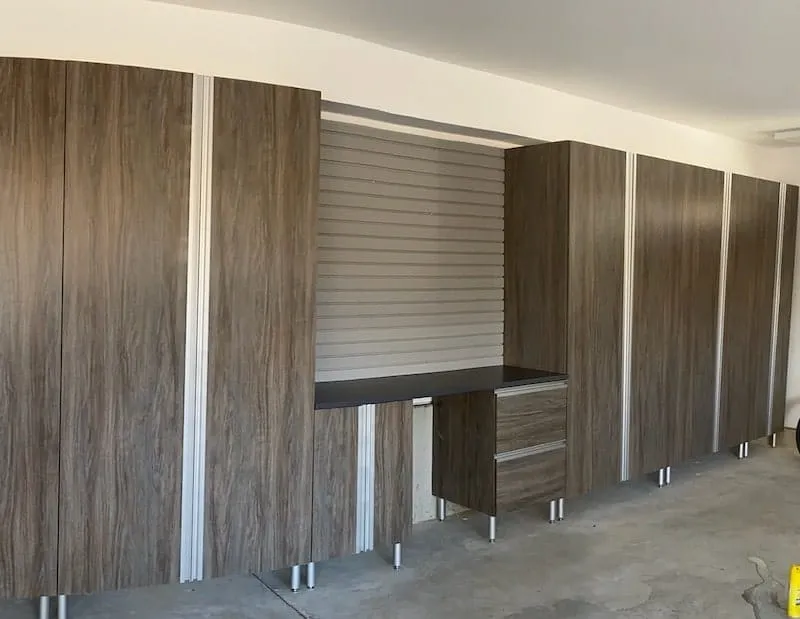
- The workshop wall. A run of base and tall cabinets with a workbench in the middle and slatwall above it. Hand tools on the wall, power tools in drawers, chemicals locked away.
- The utility closet. A tall broom cabinet next to shelving for cleaning supplies, recycling bins and overflow pantry items, close to the door into the house.
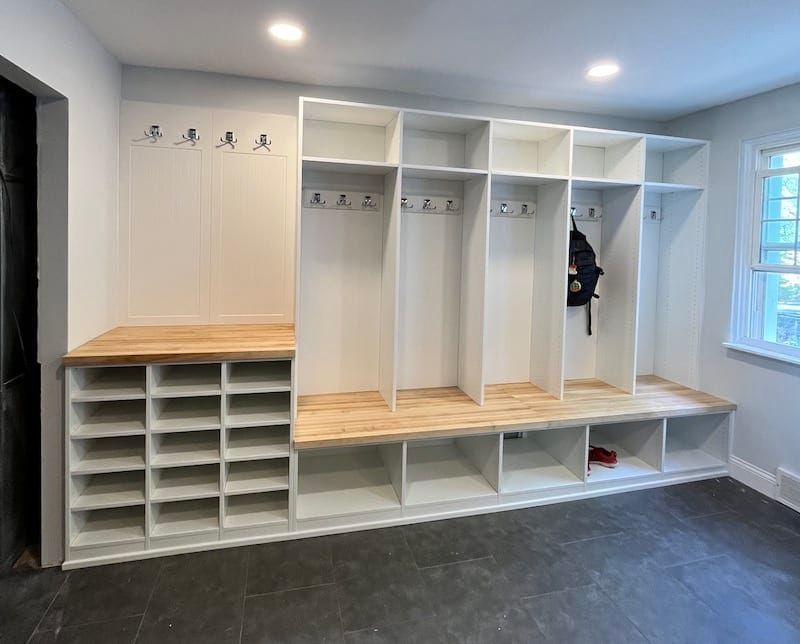
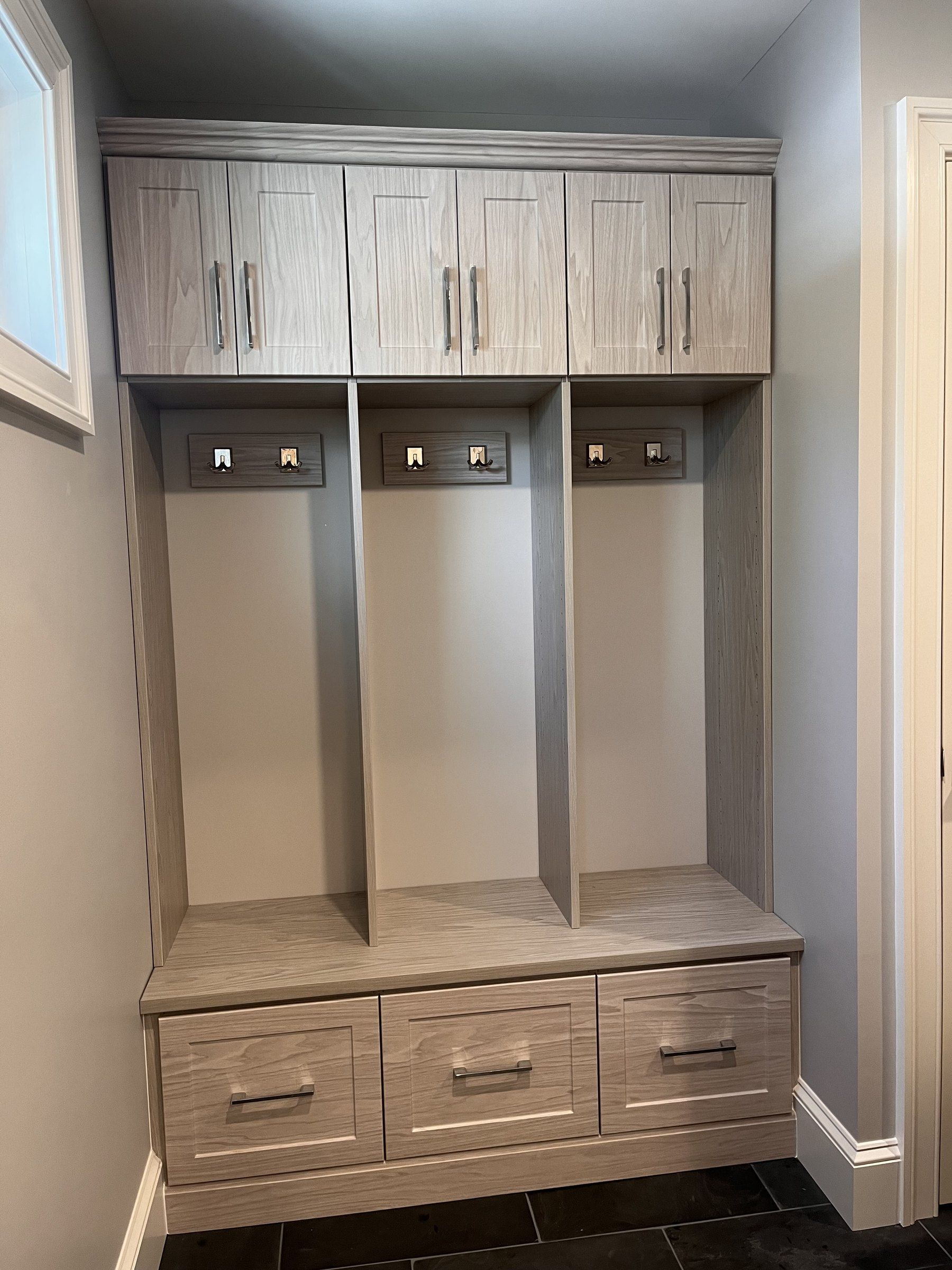
- The garage entry drop zone. Cubbies, hooks and a bench by the house door for coats, backpacks and boots. If the garage is your family’s main entrance, our mudroom organization ideas carry over directly.
- The sports corner. Slatwall with bike hooks, ball bins and a shelf for helmets, kept on the side opposite the car.
A garage closet for clothes
Many people search for a garage wardrobe because the house has run out of closet space. It can work, with care:
- Use closed cabinets, not open rods. Doors keep out dust, pollen, exhaust and mice. A tall cabinet with a hanging rod inside is the garage version of a wardrobe.
- Raise everything. Mount the cabinet on a rail or legs at least 4 inches off the slab.
- Control moisture. Breathable garment bags for hanging items, sealed bins for folded ones, and moisture absorbers in humid months.
- Store the right things. Off-season coats, outdoor work clothes and kids’ hand-me-downs do fine. Leather, silk, wool suits and anything valuable belong inside the house.
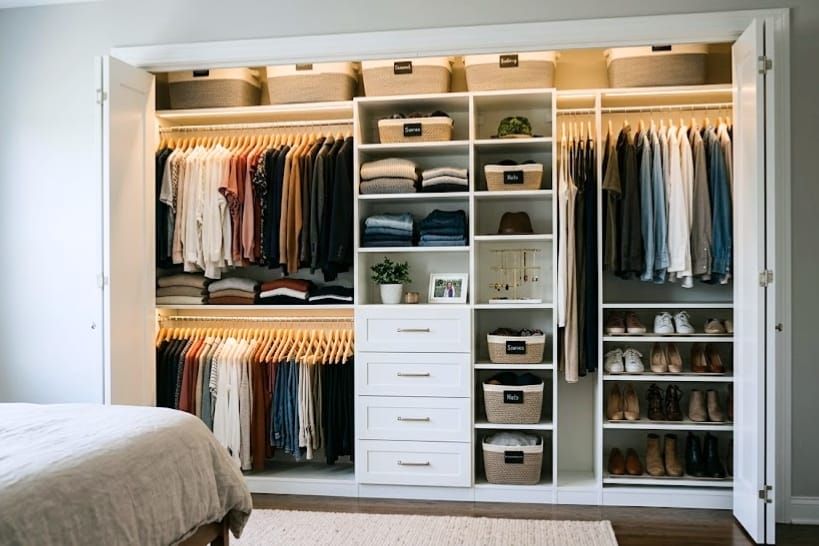
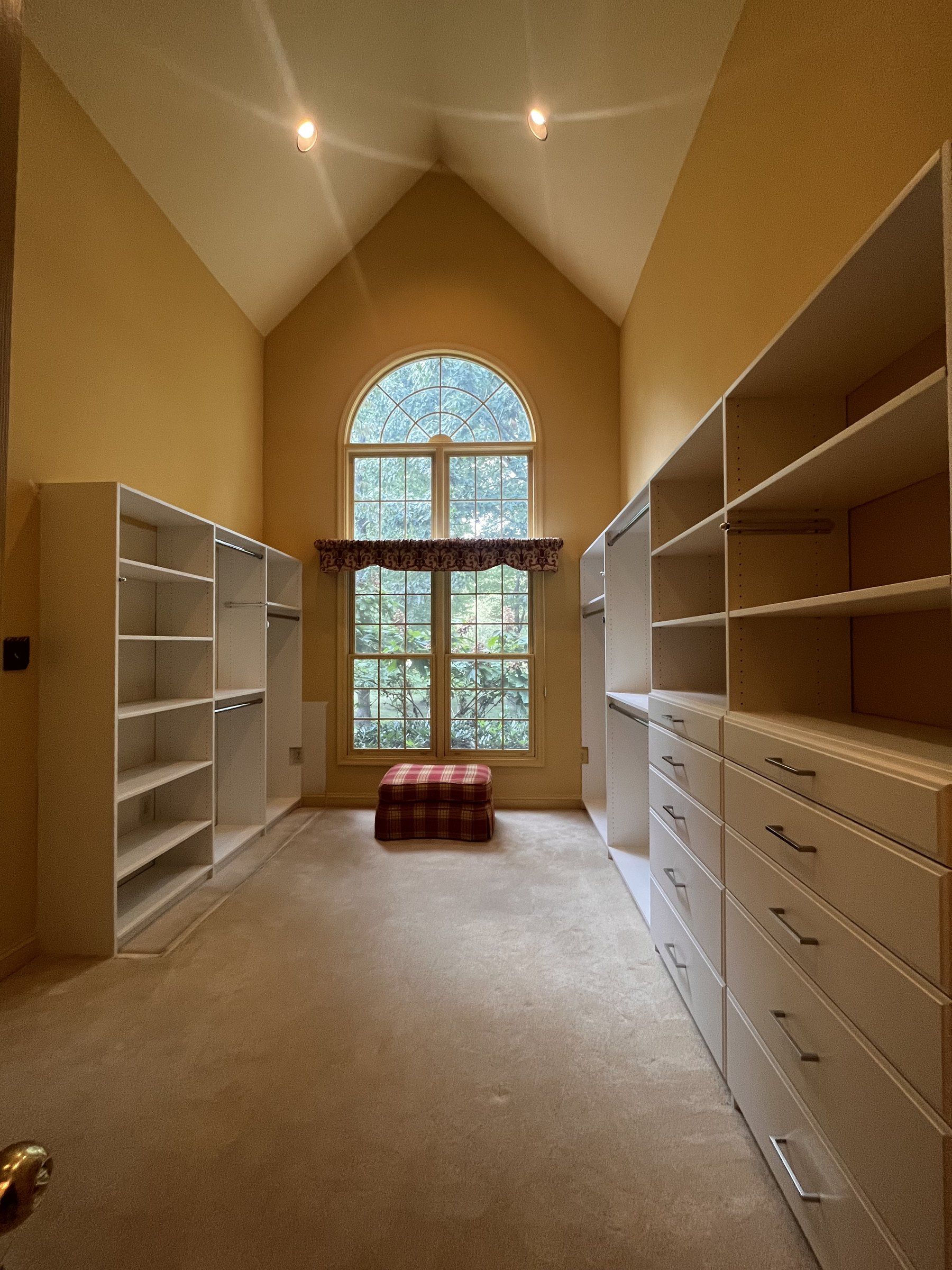
If what you really need is more clothes storage in the bedroom, a wardrobe closet or a rebuilt bedroom closet is usually a better answer than the garage.
Materials that survive a Pennsylvania garage
Garages here swing from humid summers to freezing winters, and cars drag in snowmelt and road salt. Material choice matters more than it does indoors:
- Powder-coated steel: strongest and most moisture-tolerant. Touch up scratches so they do not rust.
- Sealed plywood: durable and holds screws well when finished properly.
- Sealed MDF or melamine: fine in a dry or heated garage if every edge is sealed. Swells if it sits in water.
Installation habits that extend any material’s life:
- Keep cabinets at least 4 inches off the floor on rails or legs.
- Screw tall cabinets into studs.
- Check each shelf’s weight rating, and keep spans for heavy loads under about 36 inches or add a center support.
- Replace cardboard boxes with sealed plastic bins to keep out moisture and pests.
DIY shelving or a custom garage system?
Ask yourself a few questions:
- Do you want both cars parked inside?
- Will you store heavy tools or equipment?
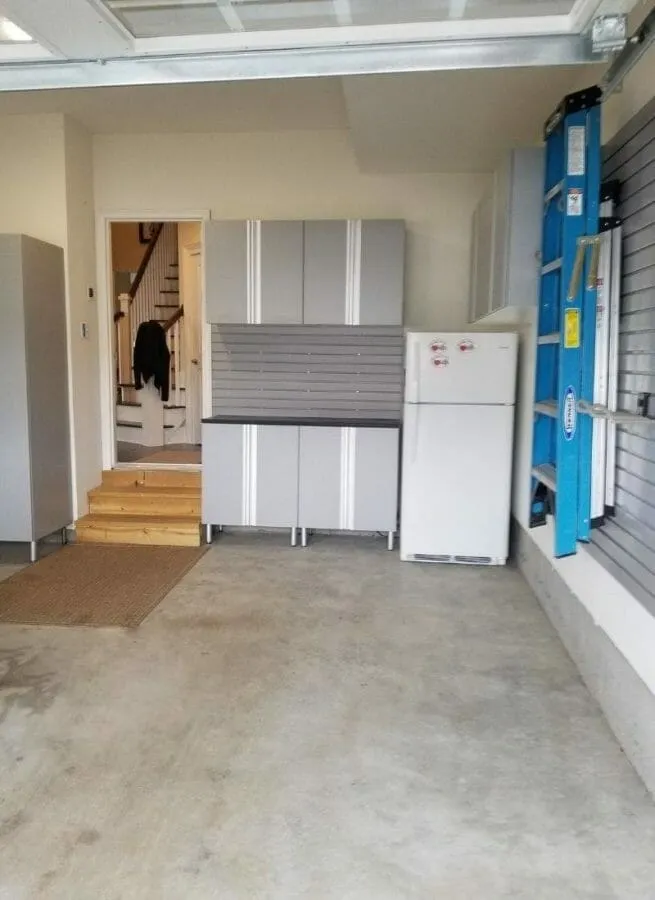
- Is the layout awkward, with steps, a water heater, a side door or a low ceiling?
- Do you want the storage to last as long as you own the house?
If you answered no to most of those, wall shelving and a few hooks may be all you need. If you answered yes, a designed system gets more out of the walls. See our garage storage page for what we build, or our garage storage cabinets in Bucks County page if you are local. Cost depends on the number of cabinets, the workbench and the finishes, and our custom closet cost guide explains what moves the price.