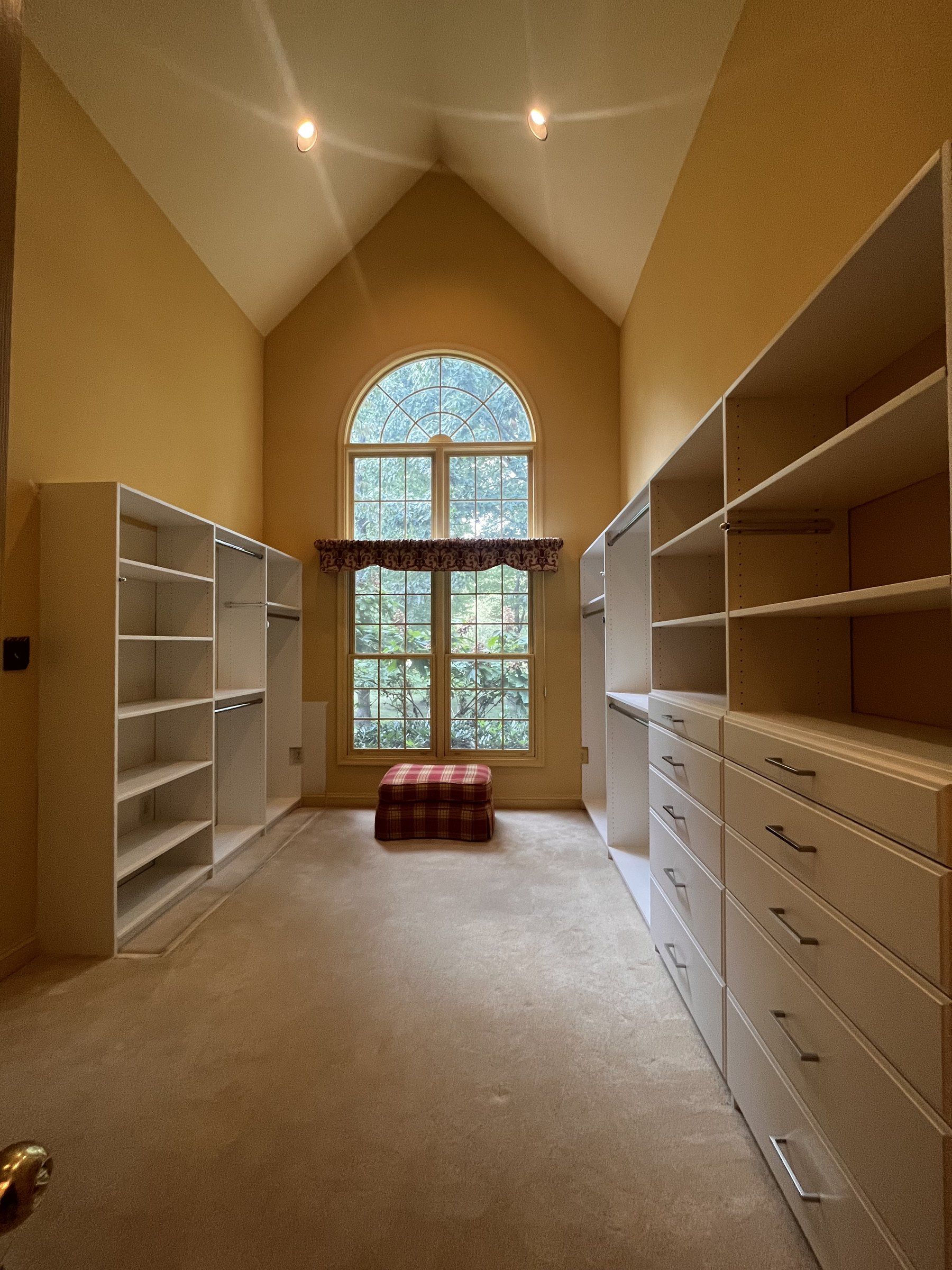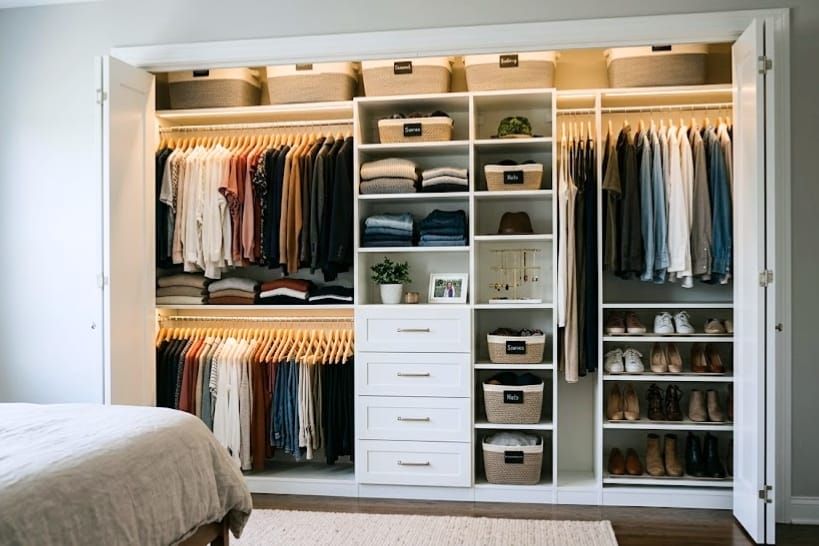
The best reach-in closet organization ideas use the closet’s full height and plan around its doors: double-hang rods where one rod used to be, drawers placed inside the door opening, shelves to the ceiling, and low-use items in the hard-to-reach corners. Closets For Less designs and installs reach-in closet systems across Bucks and Montgomery County, and these are the ideas that work in small closets.
Small reach-in closet ideas at a glance
| Idea | What it fixes | Cost to try |
|---|---|---|
| Slim matching hangers | Crowded rod | Low |
| Second rod for double-hang | Too little hanging space | Low to moderate |
| Shelf run to the ceiling | Wasted space above the old shelf | Moderate |
| Drawer stack inside the closet | Dresser crowding the bedroom | Moderate to higher |
| Shoe shelf at floor level | Shoes piled on the floor | Low |
| Hinged doors in place of bifolds | Half the closet blocked | Moderate |
| Battery motion lights | Dark shelves and corners | Low |
Measure and zone before you buy anything
Buying organizers before measuring is the most common way to end up with a cluttered closet full of storage products. Start here:
- Declutter first. Remove what you no longer wear.
- Sort into five groups: long-hang, short-hang, folded, shoes and accessories, and household items (vacuum, bedding, luggage).
- Measure the rod each group needs. Short-hang items usually take far more rod than long-hang, which is why double-hang works in most closets.
Then zone by how often you use things:
- Middle zone (waist to eye level): everyday clothes and accessories.
- Top shelf and corners: off-season clothes, luggage, spare bedding.
- Floor zone: shoes on a shelf, a hamper, and any tall items like a vacuum in their own spot.
Double-hang: the biggest gain in most small closets
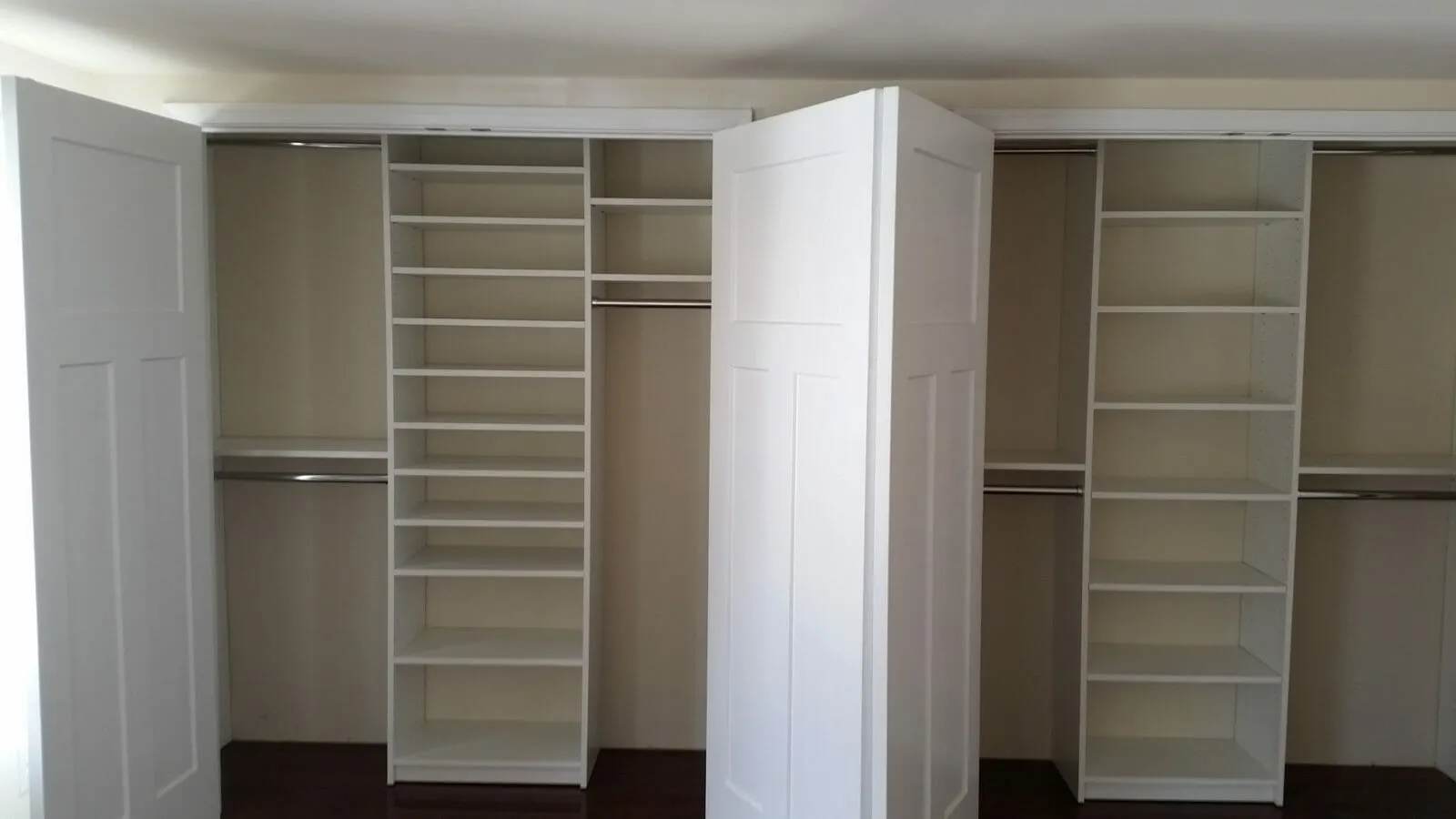
A standard builder closet has one rod about 66 inches up and a single shelf above it. Shirts, blouses and folded pants only need about 40 inches of height, so two rods stacked one above the other nearly double the hanging space. Leave a short section of single long-hang for dresses and coats. If hanging space is your main problem, our guide to maximizing closet space with little hanging room has more layouts.
Plan the layout around your closet doors
The doors decide where drawers and shelves can go:
Sliding or bypass doors
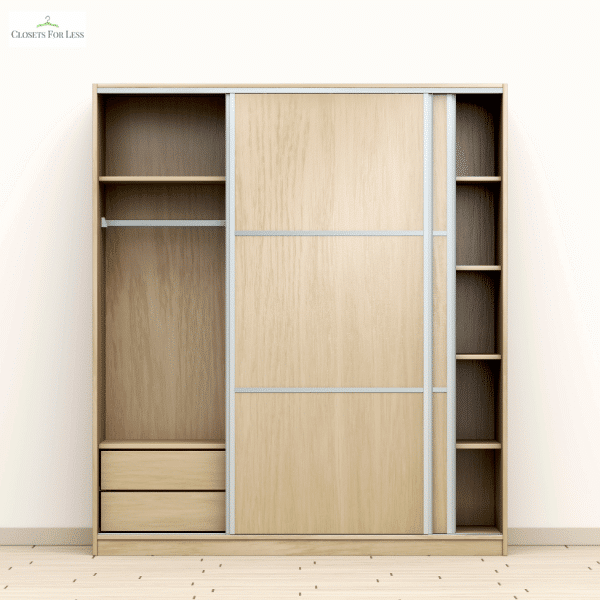
Only half the closet is open at once. Put drawers inside the opening of one panel, not in the center where the doors overlap. Shallow drawer units help in tight closets.
Bifold doors
Bifolds open more of the closet, but the folded panels stick into the opening. Leave clearance so drawers and pull-outs do not hit them.
Hinged doors or no doors
The most access. Drawers can be centered, and pull-out baskets and corner shelving are easier to use.
If the closet is wider than its door opening, the ends behind the wall become dead corners. Use them for low-use items on shelves, and keep everyday clothes in the open middle. Drawer placement is covered in more depth in our guide to closet drawer systems.
Quick reach-in closet ideas for this weekend
- Swap the hangers. Slim, matching hangers free several inches of rod and make the closet look calmer.
- Add a second rod. A hanging double-rod bar is a no-drill way to test double-hang before installing it permanently.
- Light it. Rechargeable motion lights or adhesive LED strips under the shelf brighten a dark closet with no wiring.
- Get shoes off the floor. A low two-tier shoe shelf fits under short-hang clothes. For larger collections, see our custom shoe closet ideas.
- Label bins on the top shelf. You will actually put things back.
- Give the vacuum a home. Tall household items need a defined spot at one end so they do not crowd the clothes.
Ideas for specific reach-in closets
- Kids’ rooms: Start rods low and add adjustable shelves so the closet can grow with them.
- Shared closets: Split by person, not by item type, so each side has its own hang, shelf and drawer space.
- Hall or coat closets: One long rod for coats, a shelf for hats and gloves, a boot tray at the bottom.
- Closets in older homes: Shallow or narrow closets in older Bucks County houses often benefit from shelves and drawers instead of a rod that barely fits hangers sideways.
When to move from organizers to a custom reach-in system
If drawers cannot open, corners fill with clutter, or the bedroom still needs a dresser after you have reorganized, the problem is the layout, not the products. A custom reach-in closet is designed to the closet’s exact width, height and doors, with the mix of rods, shelves and drawers your wardrobe needs. Pricing depends on size, drawers and finish; our custom closet cost guide explains what moves the number, and a free in-home consultation is followed by a design and an estimate for your closet.